Your First Personal Training Session in Dubai: What to Expect
Your first personal training session can feel like a big step, especially if you have not trained for a while. The good news is that it is usually much simpler than people imagine. Here is what happens, what to prepare and how to get the most from it.
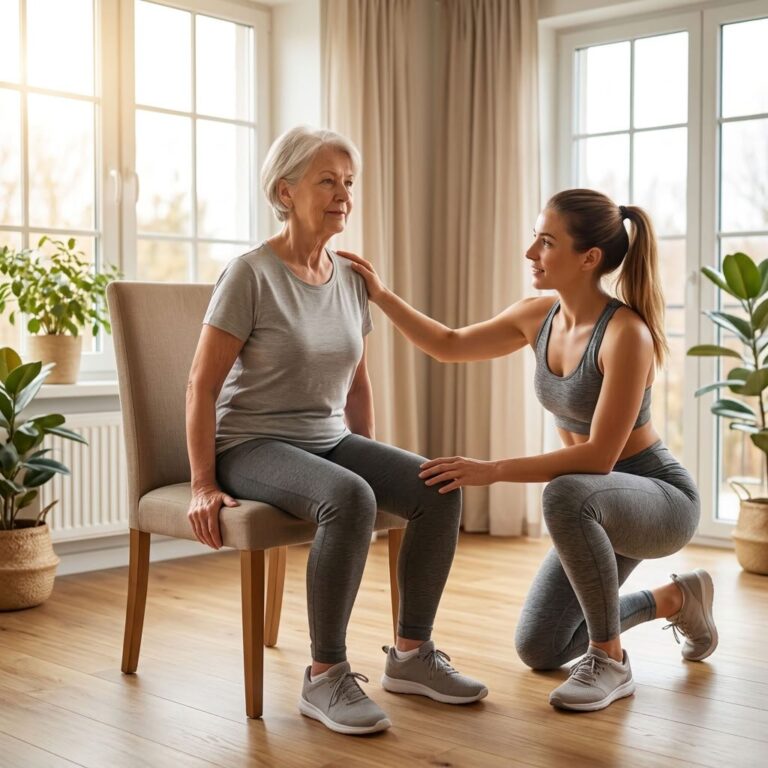
How your first personal training session starts
It starts with a conversation, not a workout. Your coach asks about your goal, your schedule, any injuries or health conditions, and how you feel that day. At YourTurn DXB we call this mind first: we want to understand what has worked and what has stopped you before building anything.
What happens during the session
- Check-in: a few minutes on energy, sleep and any aches.
- Warm-up: gentle mobility and movement to get ready.
- Main work: exercises chosen for your goal, at a level that challenges you without overwhelming you.
- Cool-down: stretching and a short review of how it went.
- Next step: a clear plan for the week, so you know what to do before the next session.
What to wear and prepare
Wear comfortable clothes you can move in and shoes you can train in. Have water ready and eat something light an hour or two before. You do not need equipment, because your coach brings it. A bit of clear floor space is enough.
Where the session takes place
Your coach comes to you: your home, your building gym, a park or the beach. If you live in an area such as JVC, Al Barsha, Mirdif or Palm Jumeirah, you can find the details on that area page.
Questions to ask your coach
- How will you adjust the plan if I feel tired or sore?
- How often should I train each week to reach my goal?
- What can I do on the days we do not meet?
If you have health concerns
Our coaches provide fitness and motivation coaching, not medical treatment. If you have an injury, are pregnant or have a health condition, speak to your doctor first and tell your coach so they can plan around it.
Book your free first session
New clients get a free first session, so you can meet your coach and decide with no pressure. Message us on WhatsApp with your area and preferred time. You can also meet the coaches first.
Personal Trainer vs Gym in Dubai: Which Is Right for You?
Choosing between a personal trainer vs gym in Dubai is mostly a question of what keeps you consistent. A gym gives you equipment and space. A trainer gives you a plan, accountability and someone who adjusts the session to how you feel. This guide compares the two honestly so you can decide.

Personal trainer vs gym in Dubai: the main differences
- Cost: a gym membership is usually cheaper per month. A trainer costs more per session but replaces guesswork. See our guide to personal trainer cost in Dubai.
- Time: a gym means travelling there and back. A home trainer comes to you, which matters in Dubai traffic and summer heat.
- Guidance: in a gym you decide what to do. With a trainer, the plan is built around your goal and adjusted as you progress.
- Motivation: a booked session with a person waiting for you is harder to skip than a membership you can use any day.
- Equipment: a gym has more machines. Many goals, such as fat loss, strength and mobility, need far less than people expect.
When a gym is a good choice
A gym suits you if you already know how to train, enjoy the atmosphere and will go on your own without being reminded. It is also a good option if you want specialised machines or a pool.
When a personal trainer is a better choice
A trainer is usually the better fit if you are a beginner, returning after a break, short on time, or have tried a gym before and stopped going. It also helps if you want to learn a skill like your first pull-up or a handstand, where good coaching matters more than machines.
Can you do both?
Yes, and many people do. A common pattern is one or two coached sessions a week, then training alone on the other days using the plan your coach gave you. That way you get guidance without paying for a session every day.
Home training in Dubai
Home training removes the biggest barrier, which is getting there. Your coach brings the equipment and trains you in your living room, building gym, park or beach. We cover areas such as Dubai Marina, Downtown, Business Bay, Jumeirah and Dubai Hills.
Try it before you decide
The easiest way to compare is to try one session. New clients get a free first session. Message us on WhatsApp and we will match you with a coach.
Female Personal Trainer in Dubai: Home Training for Women
If you are looking for a female personal trainer in Dubai who can come to your home, you are not alone. Many women tell us they train better with a woman coach, especially when they are starting again after a baby, feel self-conscious in a busy gym, or simply prefer privacy. This guide explains how home training with a female coach works and how to choose well.
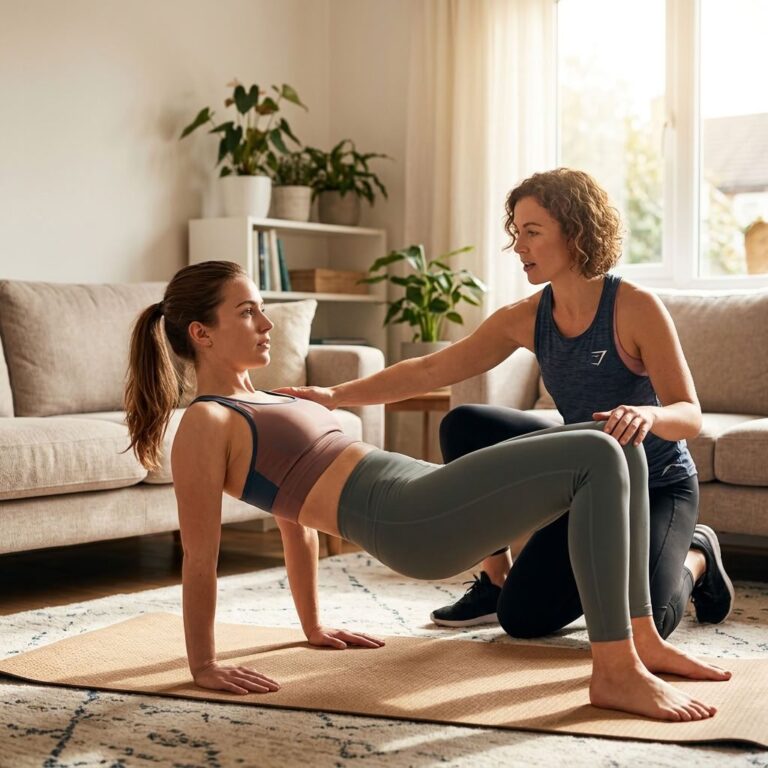
Why many women choose a female personal trainer in Dubai
There is no single reason, and none is better than another. These are the ones we hear most often:
- Privacy: training in your own space means no one is watching, which helps many beginners relax.
- Comfort: some women feel more at ease discussing their body, energy and goals with another woman.
- Modest dress: training at home lets you wear what you are comfortable in.
- Family schedules: a coach who comes to you fits around school runs, work and nap times.
What home training with a female coach looks like
Your coach arrives with the equipment, so you do not need a home gym. Sessions can happen in a living room, a villa garden, your building gym or a quiet park. Most of the work uses bodyweight, bands and light weights, so even a small apartment is enough.
The first conversation is about you, not exercises. Your coach asks what you want, what has stopped you before and how you feel today. Then the plan is built around that, with gradual steps you can keep up. You can read more about this on our about page.
Training after a baby or with a busy schedule
Many of our women clients are moms who want strength and energy back without leaving the house. Short, focused sessions work well here, and so does training in the same room as a sleeping child. Our coaches are not medical professionals, so if you have recently given birth or have a health condition, please check with your doctor before you begin. Gannat Refaat is a mobility and flexibility specialist who also trains strength and weight loss goals.
How to choose a female personal trainer in Dubai
Whoever you pick, ask a few simple questions first:
- Is the coach certified, and for how long have they been coaching?
- Have they worked with goals like yours, such as fat loss, strength or mobility?
- Do they speak your language, English or Arabic?
- Is there a trial session, and are the prices clear with no joining fee?
You can compare our coaches on the coaches page and see our packages on the home page.
Where we train women in Dubai
Our coaches travel across the city, including Dubai Marina, JVC, Dubai Hills, Arabian Ranches, Al Barsha and Mirdif. If your area is not listed, message us and we will check.
Start with a free first session
New clients get a free first session. Message us on WhatsApp with your area and preferred time, and we will match you with a female coach.
Running for Beginners in Dubai: A 6-Week Plan and Heat Tips
Running for beginners in Dubai can feel tricky at first, because the heat, humidity and busy roads add extra challenges. The good news is that a few smart choices make it safe, enjoyable and sustainable. In this guide, our coaches at YourTurn DXB explain how to start gently and keep going.
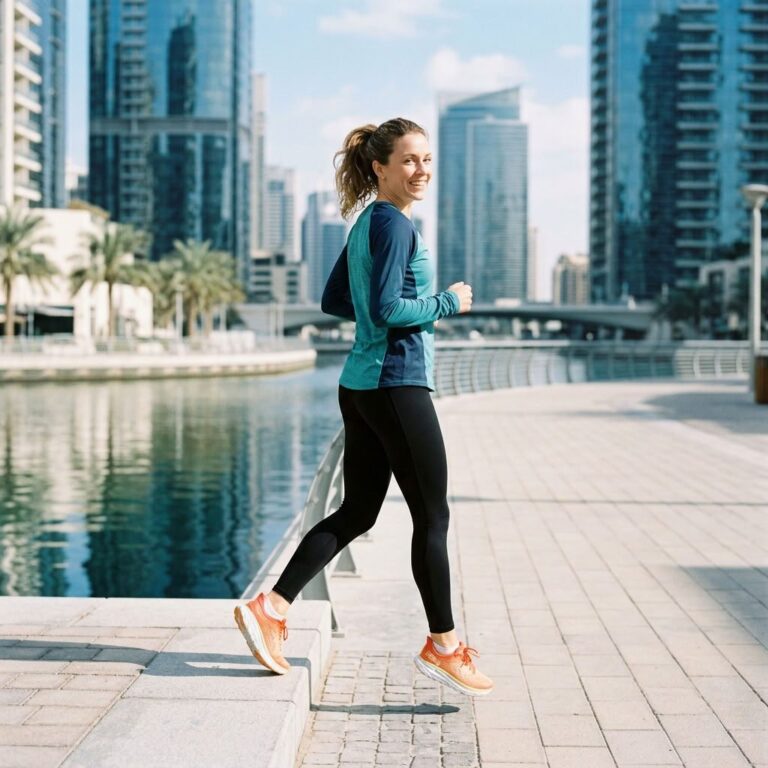
Why running for beginners in Dubai is different
Most beginner plans are written for cooler countries. In Dubai, however, you need to think about temperature and humidity before you think about speed. For example, a pace that feels easy in winter can feel very hard in September.
Because of this, your goal is consistency, not distance. First, learn how your body responds to warm air. Next, build a routine that fits your day. Finally, add distance slowly once running feels comfortable.
Start with how you feel
At YourTurn DXB, we use a mind-first approach. Before any plan, we ask how you feel about running. Do you feel nervous, bored or short of time? Your answer shapes the plan.
Many beginners quit because they push too hard in the first week. Instead, aim to finish each session feeling that you could do a little more. That feeling builds confidence, and confidence keeps you coming back.
The best time and place to run
For running for beginners in Dubai, timing and location decide how comfortable you feel.
Timing matters more here than almost anywhere else. In the hotter months, early morning and late evening are the most comfortable windows. In winter, you have far more freedom.
Good beginner locations usually share a few traits:
- Flat, even paths with a soft or smooth surface
- Shade, trees or buildings that block the sun
- Public parks and beachfront paths with other people around
- Easy access to water and a place to rest
If the weather is too hot or humid, move your session indoors. A treadmill or a short indoor circuit is a perfectly good choice. There is no shame in avoiding extreme heat.
A simple walk-run plan for your first month
The easiest way to start is to mix walking and running. This method protects your joints and lets your breathing settle. Here is a gentle four-week outline for running for beginners in Dubai that you can adapt.
- Week 1: Walk for five minutes, then alternate one minute of easy jogging with two minutes of walking, for about 20 minutes. Do this three times.
- Week 2: Alternate two minutes of jogging with two minutes of walking. Keep the same three sessions.
- Week 3: Alternate three minutes of jogging with one minute of walking.
- Week 4: Jog for five minutes, walk for one minute, and repeat until you reach about 25 minutes.
Of course, you may need to repeat a week. That is completely normal. Progress is not a race, and a slower build lowers the risk of pain.
Heat safety for running for beginners in Dubai
Heat is the biggest factor for new runners here, so it deserves a careful routine. First, drink water through the day, not only during your run. Next, wear light, breathable clothes and a cap if you run in daylight.
Also, watch for warning signs. Stop and rest in the shade if you feel dizzy, sick or unusually tired. Then cool down slowly and sip water. Do not try to finish the session at any cost.
- Run at the cooler times of day whenever you can
- Carry a small bottle of water on longer routes
- Use sunscreen and sunglasses outdoors
- Slow down on humid days, because effort feels higher
During Ramadan, shift your runs to the hours after iftar or before suhoor, and keep them shorter and easier. If you have a health condition or injury, check with your doctor first.
Build strength to support your running
Running alone is not enough for most beginners. Strong legs, hips and core muscles help you move well and avoid niggles. For that reason, we always add short strength work to a running plan.
Try these bodyweight moves twice a week:
- Squats to a chair for strong thighs
- Glute bridges for the hips
- Calf raises for the lower legs
- Planks for the core
As a calisthenics team, we love these exercises because you need no equipment. You can do them at home, in a park or on the beach. For more ideas, read our guide on bodyweight exercises you can do at home and our tips on how to train outdoors safely.
Why a coach helps you start well
A coach saves you from the common mistakes of running for beginners in Dubai. For example, many beginners run too fast, wear the wrong shoes or skip rest days. A coach spots these habits early and corrects them kindly.
Our male and female coaches come to your home, park or beach, so there is no travel and no excuse. If you want to compare options first, see our guide to personal trainer cost in Dubai. The World Health Organization physical activity guidelines are also a helpful reference for weekly activity targets.
Frequently asked questions
How often should I run as a beginner?
Three days a week is a good start. Leave a rest day between runs so your body can adapt. You can add easy walks or strength work on the other days.
Can I run in Dubai in summer?
Yes, but choose very early or late hours, or run indoors. Slow your pace, drink water and stop if you feel unwell. On the hottest days, an indoor session is the wiser choice.
Do I need special shoes?
Comfortable running shoes with good cushioning are enough. Replace them when they feel flat or worn. A proper fit matters more than a famous brand.
How long until running feels easier?
Most people notice small changes within a few weeks, but everyone is different. Stay patient and keep your effort easy. Regular sessions matter more than fast ones.
Ready to start? Book a session on WhatsApp and let our coaches build a gentle plan for running for beginners in Dubai that fits your life.
Boxing Fitness for Beginners: Basics, Benefits and a Home Session
Boxing fitness for beginners is one of the most fun ways to build energy, coordination and confidence. You do not need to fight anyone or step into a ring. Instead, you learn simple punches and combinations while getting a full-body workout.
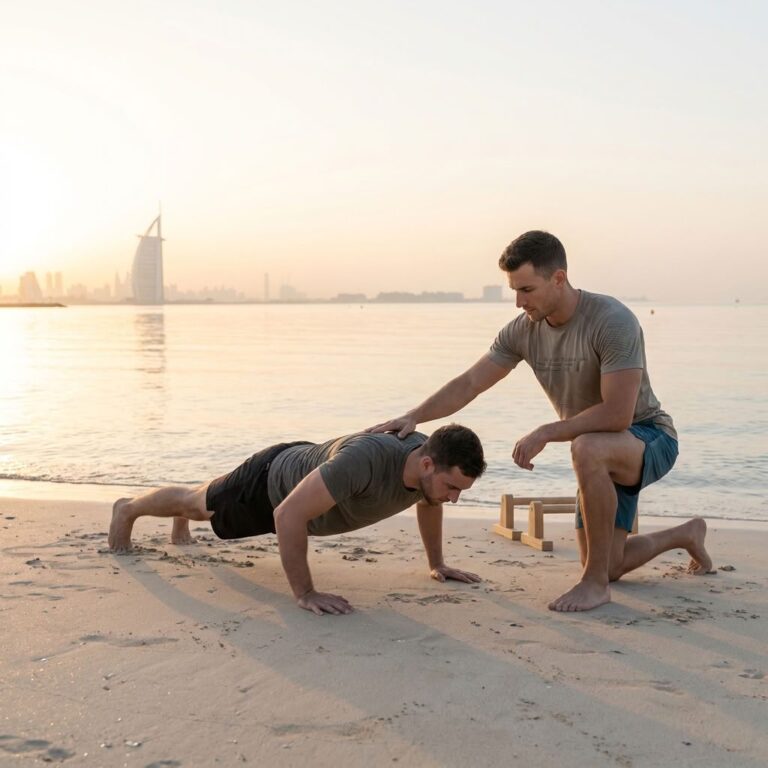
What boxing fitness for beginners really means
Boxing fitness is a training style, not a combat sport. You use punches, footwork and light movement to raise your heart rate and strengthen your body. Nobody hits you, and there is no sparring.
Because of this, boxing fitness for beginners suits almost everyone. Busy professionals use it to release stress after work. Moms enjoy it at home because it feels powerful and takes little space. Many seniors also like a slower, gentle version.
Why start with how you feel
At YourTurn DXB, we begin with your mind. Do you feel tense, tired or low on motivation? Boxing can help you channel that feeling into movement. However, we always keep the intensity matched to your mood and energy that day.
This approach matters for anyone starting boxing fitness for beginners classes. When you enjoy a session, you come back for the next one. Therefore, we focus on fun, rhythm and small wins before we ever focus on speed or power.
The basic stance and four punches to learn first
Good technique protects your wrists, shoulders and back. First, learn the stance. Stand with your feet slightly wider than your hips, one foot a little behind the other. Bend your knees softly and keep your hands near your chin.
Next, learn these four punches:
- Jab: a quick, straight punch with your front hand.
- Cross: a straight punch with your back hand, turning your hip and back foot.
- Hook: a curved punch that swings around at chest or head height.
- Uppercut: a punch that travels upward from low to high.
Start slowly, and focus on form before speed. For example, a simple jab-cross combination repeated for one minute teaches rhythm and breathing. Keep your shoulders relaxed and exhale with each punch.
A simple 20-minute boxing fitness for beginners session
You can try this routine at home with no equipment. If you have a health condition or injury, check with your doctor first. Then follow these steps.
- Warm-up (4 minutes): march on the spot, arm circles, gentle twists and light bouncing.
- Round 1 (3 minutes): jab only, then jab and cross. Rest for 30 seconds.
- Round 2 (3 minutes): jab, cross and a small step back. Rest for 30 seconds.
- Round 3 (3 minutes): add hooks at a slow pace. Rest for 30 seconds.
- Finisher (2 minutes): squats and planks to build leg and core strength.
- Cool-down (3 minutes): slow breathing and gentle stretches.
As you improve, add one more round or shorten the rests. However, never rush the changes. A steady build keeps you safe and consistent.
Equipment: what you need and what you can skip
The best news is that you can start with nothing. Shadow boxing, which means punching the air, is a great first step. It teaches technique without any strain on your hands.
Later, you may want a few simple items:
- Comfortable trainers with a flat, grippy sole
- Light, breathable clothes for Dubai weather
- Wraps or gloves if you start hitting pads or a bag
- A water bottle and a small towel
When you are ready for pads, a coach can hold them for you and call the combinations. This adds focus and makes the session feel like real boxing, without any contact between people.
Training boxing fitness for beginners in Dubai heat
Boxing raises your heart rate quickly, so heat and humidity matter. Indoors with the air conditioning on, you can train at any time. Outdoors, choose the cooler early morning or evening hours, and look for shade.
Also, drink water before and after your session, and rest if you feel dizzy. During Ramadan, keep sessions shorter and lighter, ideally after iftar. Our male and female coaches adjust every plan to the season and to your comfort.
Boxing also pairs well with strength work. Read our guide to calisthenics for beginners and our tips on training at home as a busy mom to build a balanced week.
How often should you train?
Two to three sessions a week is plenty for beginners. Consistency beats intensity every time. Leave a rest day between sessions so your muscles can recover. On other days, you can walk, stretch or do light strength moves.
The World Health Organization physical activity guidelines are a helpful reference for weekly activity. Meanwhile, if you want to plan your budget, see our guide to personal trainer cost in Dubai.
Frequently asked questions
Do I need to hit another person?
No. Boxing fitness uses air, pads or a bag. There is no sparring and no contact between people.
Is boxing good for weight loss?
It can support a weight loss plan because it raises your heart rate and uses your whole body. However, results depend on regular training, sleep and food habits. No session can guarantee a specific result.
Can women and moms try it at home?
Yes, absolutely. Many women love it because it is energetic and needs very little space. A coach can come to your home and adapt the session to your level.
Will it hurt my wrists or shoulders?
Not if you learn good form and start slowly. Keep your wrists straight and your shoulders relaxed. If you feel pain, stop and ask your coach or doctor.
Ready to throw your first punch? Book a session on WhatsApp and our coaches will bring a friendly boxing fitness for beginners session to your home, park or beach.
Desk Worker Mobility Routine: 10 Minutes to Loosen Up
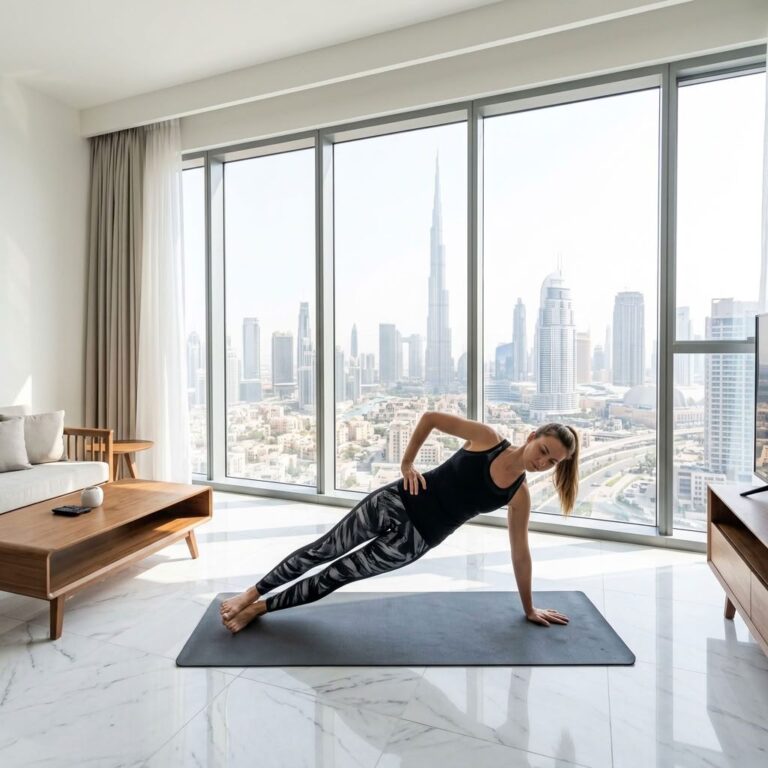
Desk worker mobility is the simple habit of moving your joints through their full range every day. If you sit for hours at a computer, your neck, hips and back often feel stiff. This 10-minute routine helps you loosen up without special equipment.
Why desk worker mobility matters
Sitting for long periods keeps your hips bent and your shoulders rounded. Over time, these positions can feel tight and uncomfortable. Therefore, regular movement breaks are one of the easiest ways to feel better at work.
Good desk worker mobility does not mean extreme stretching. Instead, it means gentle, controlled movement that you repeat often. Small habits, done daily, matter more than one long session on the weekend.
Start with how your body feels
At YourTurn DXB, we always start with the mind and body check-in. Before you move, take three slow breaths. Then notice where you feel tight: the neck, the lower back, the hips or the wrists.
This step is useful for desk worker mobility because it tells you where to spend more time. For example, if your neck feels stiff after a long meeting, spend an extra minute on the neck moves below. Move slowly, and never push into pain.
The 10-minute desk worker mobility routine
You can do this routine beside your desk, in a meeting room or at home. Hold each position or repeat each movement for the time listed. If you have a health condition or injury, check with your doctor first.
- Neck tilts (1 minute): Drop your ear toward your shoulder, hold for 15 seconds, then switch sides. Then slowly turn your head left and right.
- Shoulder rolls (1 minute): Roll your shoulders back in big, slow circles. Next, roll them forward.
- Chest opener (1 minute): Clasp your hands behind your back, lift your chest and breathe deeply.
- Seated twist (1 minute): Sit tall, place one hand on the opposite knee and rotate gently. Repeat on the other side.
- Cat-cow (1 minute): On hands and knees, or seated, arch and round your back slowly with your breath.
- Hip flexor stretch (2 minutes): Step into a lunge, tuck your pelvis under and hold for one minute per side.
- Standing forward fold (1 minute): Bend your knees slightly and let your upper body hang. Relax your neck.
- Wrist circles and stretches (1 minute): Circle your wrists, then gently stretch your fingers back.
- Deep squat hold (1 minute): Sink into a comfortable squat, holding a chair or desk for balance if needed.
Breathe slowly through every move. If any position hurts, ease off or skip it.
Micro-breaks for desk worker mobility during the day
You do not need a full 10 minutes every time. In fact, short breaks work very well. Try to stand up at least once every hour, even for 30 seconds.
Here are easy ideas for micro-breaks:
- Stand up whenever you take a phone call
- Do five shoulder rolls after each email batch
- Walk to a water fountain or window every hour
- Set a gentle reminder on your phone or watch
- Stretch your chest and hips while the kettle boils
These tiny actions add up. Because they cost almost no time, they are easy to keep as habits.
Set up your workspace to support movement
Your workspace can help or hurt. First, place your screen at eye level so your neck stays neutral. Next, keep your feet flat on the floor and your knees close to a right angle.
Also, sit back in your chair so your lower back has support. Keep your keyboard close so your shoulders stay relaxed. However, even a perfect chair does not replace movement, so keep changing position.
In Dubai, many offices keep the air conditioning cold. Cold air can make muscles feel tighter. Therefore, warm up a little before stretching, for example with a short walk or arm swings.
Build strength to keep your body balanced
Desk worker mobility works best with strength. Strong glutes, back and core muscles hold your posture without effort. For that reason, our coaches add a little bodyweight strength to most programmes.
Try two short strength sessions each week with squats, glute bridges, wall push-ups and planks. You can learn more in our guide to bodyweight exercises you can do at home and our article on our calisthenics beginner’s guide for Dubai.
Our male and female coaches can come to your home or office-friendly space and build a plan around your schedule. If you are comparing options, read our guide to personal trainer cost in Dubai.
How often should you practise?
Aim for the short routine once a day, ideally at the same time. For example, you could do it before lunch or just after work. In addition, add micro-breaks through the day.
The World Health Organization physical activity guidelines also encourage regular activity and less sitting. Use them as a general guide, and adjust to your own level.
Frequently asked questions
Can mobility work cure my back pain?
We cannot diagnose or treat pain. Gentle movement helps many people feel looser, but persistent or severe pain needs a doctor. Please get checked before starting if you have any injury.
Do I need to change clothes?
No. Comfortable work clothes are usually fine for the seated and standing moves. For the lunge and squat, you may prefer clothes that stretch easily.
How soon will I feel a difference?
Many people feel looser right after a session. Lasting changes take regular practice over weeks. Stay patient and consistent.
Is this safe for beginners?
Yes, the moves are gentle and low impact. Go slowly and stay within a comfortable range. If you feel pain, stop and seek advice.
Ready to feel better at your desk? Book a session on WhatsApp and our coaches will build a personal desk worker mobility plan for you.
Strength Training for Seniors in Dubai: Safe, Simple and Effective
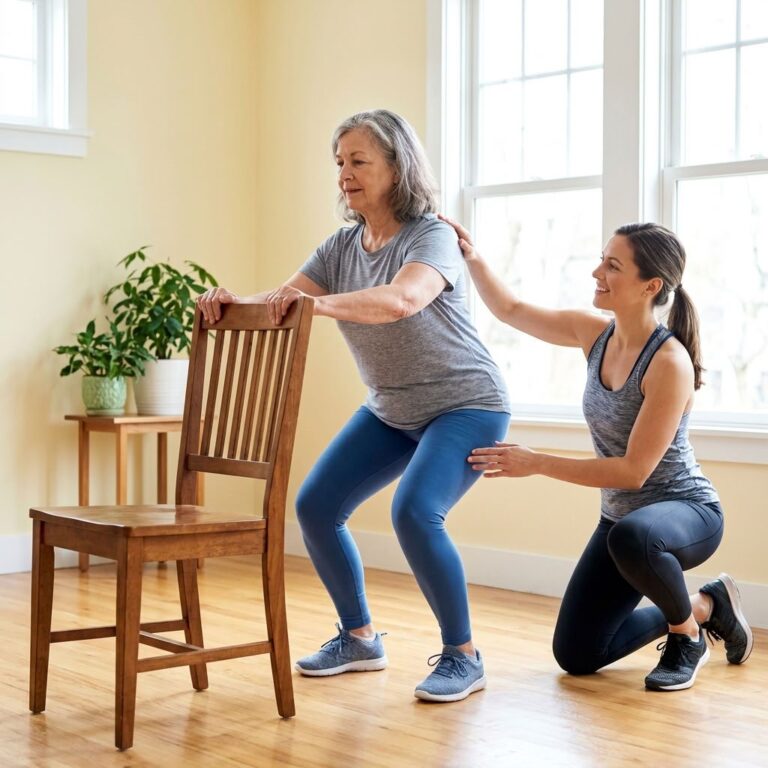
Strength training for seniors is one of the best ways to stay independent, steady and confident in daily life. You do not need heavy weights or a big gym to begin. With simple movements and a patient coach, it can feel safe and even enjoyable.
Why strength training for seniors matters
As we age, muscles naturally become weaker unless we use them. Strong legs help you climb stairs, stand up from a chair and walk with confidence. Strong arms help you carry shopping and lift your grandchildren.
In addition, regular strength training for seniors supports balance and posture. Therefore, many older adults find daily tasks easier after a few weeks of steady practice. Results vary from person to person, so we never promise a fixed outcome.
Start with how you feel
At YourTurn DXB, we start with a conversation, not a workout. We ask how you feel today, what worries you and what you want to do more easily. Some people want to play with their grandchildren, while others want to walk without fear.
This mind-first approach builds trust. Because you feel heard, you relax and move better. Moreover, you can tell your coach when a movement feels uncomfortable, and we adjust straight away.
Check with your doctor first
Safety comes first. If you have heart problems, high blood pressure, osteoporosis, joint pain or a recent injury, please speak to your doctor before you begin. Share any advice with your coach so the plan fits your needs.
During a session, stop and rest if you feel chest pain, dizziness, sudden shortness of breath or sharp pain. Then tell your doctor. Never push through these signs.
Five gentle exercises for strength training for seniors
You can do these moves at home with a sturdy chair and a wall. Move slowly, breathe steadily and keep your back straight. Start with one set of 6 to 8 repetitions.
- Chair sit-to-stand: Sit near the edge of a chair, lean slightly forward and stand up. Then sit down slowly. This builds leg strength for daily life.
- Wall push-ups: Stand an arm’s length from a wall, place your hands on it and bend your elbows. Then push back to start.
- Heel raises: Hold the back of a chair and rise onto your toes. Lower slowly. This helps your calves and balance.
- Seated leg lifts: Sit tall and straighten one leg, hold for a moment and lower it. Switch legs.
- Standing hip march: Hold a chair and lift one knee, then the other, as if marching slowly.
When these feel easy, add a second set or use light resistance bands. However, increase effort slowly, and only when you feel steady.
Balance, mobility and recovery
Strength works best when combined with balance and mobility. For example, try standing on one foot beside a counter for 10 seconds. Next, add gentle shoulder circles and ankle rolls to keep joints moving.
Recovery matters too. Leave a day between strength sessions so your muscles can rest. On other days, take a relaxed walk or do light stretching.
- Drink water before, during and after your session
- Wear supportive, non-slip shoes
- Keep the floor clear of rugs and clutter
- Train where you can sit or hold something stable
Training in Dubai: indoor comfort and outdoor timing
The Dubai climate affects how you train. For strength training for seniors, we usually recommend an air-conditioned space at home. This keeps you comfortable and lowers the risk of overheating.
If you prefer fresh air, choose early morning or evening in cooler months, and find shade. During Ramadan, we shorten sessions and move them to a time that suits your energy. Our male and female coaches come to your home, so you can train in a familiar, safe space.
How often to do strength training for seniors
Two sessions a week is a good beginning for strength training for seniors. After a month or two, many people move to three sessions if they feel comfortable. Keep each session between 20 and 40 minutes.
To progress safely, change only one thing at a time. For instance, add a few repetitions before you add resistance. If a week feels too hard, repeat it. Slow progress is still progress.
The World Health Organization physical activity guidelines recommend muscle-strengthening activities for older adults as part of weekly movement. Use them as a general guide, with your doctor’s advice.
You may also enjoy our guides on our calisthenics beginner’s guide for Dubai and a realistic weight loss plan in Dubai. If you are planning a budget, see our guide to personal trainer cost in Dubai.
Frequently asked questions
Am I too old to start strength training?
No. People can begin at any age with the right level of exercise. Start gently, get your doctor’s approval and let a coach guide you.
Do I need weights or a gym?
Not at the start. A chair, a wall and your own body weight are enough. Later, light bands or small weights can be added if suitable.
Will strength training make me bulky?
Very unlikely. Gentle strength work mainly helps you feel stronger and move more easily. It does not need to change how you look.
What if I have joint pain?
Speak to your doctor first. A coach can then choose movements and ranges that feel comfortable for you. Never exercise through sharp or increasing pain.
Ready to feel stronger and steadier? Book a session on WhatsApp and our coaches will design safe strength training for seniors at your home.
Where to Train Outdoors in Dubai: Beaches, Parks and Building Gyms
Train outdoors in Dubai and you get sunshine, sea air and plenty of space to move. However, the climate means you need to plan wisely. This guide shows you when, where and how to enjoy outdoor workouts safely all year round.
Why train outdoors in Dubai
Outdoor training feels different from the gym. Fresh air, open views and changing scenery often lift your mood. As a result, many people find it easier to stay motivated.
Outdoor sessions also add variety. You can walk to the park, work out on the grass and finish with a stroll by the water. This keeps training fresh, and boredom is one of the main reasons people quit.
It is also simple and flexible. You need very little equipment, and many bodyweight exercises work perfectly on grass or sand. For example, squats, lunges, push-ups and planks need only a small patch of space.
Start with how you feel
At YourTurn DXB, we begin every plan with your mind. Do you want energy, calm or a break from the screen? The outdoors can offer all three. We then match the session to your mood and your level for that day.
This matters because the best workout is the one you will repeat. If you enjoy your surroundings, you will come back more often. Therefore, choose a place that makes you feel good.
The best times to train outdoors in Dubai
Timing is the key to comfort. From roughly November to March, temperatures are mild, so most of the day works well. During the hotter months, however, you should train very early or after sunset.
Keep these simple rules in mind:
- Choose early morning or evening in the hot season
- Avoid the midday sun, because heat and humidity are highest
- Check the weather and humidity before you leave
- Switch to an indoor session on extreme days
During Ramadan, many people prefer to train after iftar or before suhoor. Keep sessions shorter and lighter, and listen to your body.
Good places to train outdoors in Dubai
Dubai has many public spaces that suit beginners. Well-known options include city parks such as Safa Park and Zabeel Park, as well as beachfront areas like Kite Beach and Jumeirah. Further out, cycling and running tracks near Al Qudra attract many active people.
When you choose a spot, look for these features:
- Shade from trees or buildings
- Flat grass, sand or a smooth path
- Drinking water or a shop nearby
- Other people around, for comfort and safety
Please check the current rules of each park or beach before you go. Some places have opening hours, entry rules or guidelines for group training. Our coaches help you pick a suitable spot and handle the details.
A 25-minute outdoor bodyweight workout
Try this simple routine on grass or sand. If you have a health condition or injury, check with your doctor first. Rest for 30 to 45 seconds between exercises.
- Warm-up (5 minutes): brisk walk, arm circles and leg swings.
- Squats (12 repetitions): keep your chest tall and your heels down.
- Incline push-ups (8 to 10 repetitions): use a bench or a low wall.
- Walking lunges (10 per leg): take slow, controlled steps.
- Plank (20 to 30 seconds): keep your body in a straight line.
- Glute bridges (12 repetitions): squeeze at the top.
Repeat the circuit two or three times. Then finish with five minutes of easy walking and stretching. As you improve, add repetitions or a round.
Stay safe when you train outdoors in Dubai
Heat safety is not optional. First, drink water before, during and after training. Next, wear light, breathable clothes, a cap and sunscreen.
Also, learn the warning signs of overheating. Stop and move into the shade if you feel dizzy, sick, confused or very tired. Then sip water and rest. If symptoms do not improve, seek medical help.
- Start slowly and warm up well
- Take extra rest on humid days
- Protect your feet on hot sand or pavement
- Tell someone where you are training if you go alone
For more ideas, read our guides on bodyweight exercises you can do at home and running for beginners in Dubai.
Why train with a coach outdoors
A coach brings structure, safety and motivation. You do not need to worry about the plan or the timing. Our male and female coaches come to your home, park or beach and adjust the workout on the spot.
If you are curious about budget, see our guide to personal trainer cost in Dubai. You can also follow the World Health Organization physical activity guidelines as a general reference for weekly activity.
Frequently asked questions
Can I train outdoors in Dubai in summer?
Yes, but only at very early or late hours, and with extra care. Drink plenty of water and shorten the session. On extreme days, train indoors instead.
Do I need a permit to train in a park?
Rules vary by location. Individual exercise is usually fine, but group sessions may have guidelines. Check the park or beach rules, and ask your coach for help.
What should I wear?
Choose light, breathable clothes and comfortable trainers. Add a cap, sunglasses and sunscreen. On sand, you may prefer to train barefoot or in light shoes.
Is outdoor training good for beginners?
Yes. Bodyweight exercises are simple and easy to adjust. Start slowly, and let a coach guide your technique.
Ready to move in the open air? Book a session on WhatsApp and we will help you train outdoors in Dubai safely and happily.
20-Minute Home Workout With No Equipment
Home workout no equipment needed is simpler than most people think. You only need a bit of floor space, a water bottle and about twenty minutes. This guide gives you a full routine that works for beginners in a Dubai apartment or villa.
Why a home workout no equipment routine works
Your own body is a complete training tool. Push-ups, squats and planks build strength, stamina and balance without a single dumbbell.
Moreover, a routine without kit removes the usual excuses. You do not need a gym membership, a car or a free evening. In Dubai, that matters in summer, when stepping outside at midday is not realistic.
A home workout no equipment plan also suits busy parents, because you can stop and restart around school runs and meetings.
Because the routine is short, it is also easy to repeat. Consistency beats intensity, especially in the first month.
Before you start: how to feel ready
At YourTurn DXB, we begin with how you feel, not with a timer. Ask yourself three quick questions before you move.
- How is my energy today: low, medium or high?
- Does anything hurt or feel tight?
- How much time do I really have?
Next, pick the effort level that matches your answers. A low-energy day can still be a good day if you move gently. If you have a health condition or an injury, check with your doctor first.
Warm-up for your home workout no equipment session
Spend three minutes warming up. Cold muscles feel stiff, and a short warm-up makes the main block easier.
- March on the spot for 60 seconds.
- Do 10 slow arm circles forwards and 10 backwards.
- Do 10 hip circles each way.
- Do 8 bodyweight squats at an easy pace.
- Finish with 8 gentle cat-cow movements on your hands and knees.
Keep your breathing steady. You should feel warmer, not tired.
The 20-minute routine, step by step
Work for 40 seconds, then rest for 20 seconds. Complete the six moves below, then repeat the whole circuit twice. Rest for one minute between rounds.
1. Bodyweight squat
Stand with your feet shoulder-width apart. Sit your hips back and down, keep your chest up, then stand tall. If balance is tricky, hold a chair for support.
2. Incline or knee push-up
Place your hands on a sturdy sofa or a wall, or lower your knees to the floor. Keep your body in one line and lower your chest slowly. As you get stronger, use a lower surface.
3. Glute bridge
Lie on your back with your knees bent. Press through your heels and lift your hips. Squeeze at the top for one second, then lower with control.
4. Reverse lunge
Step one foot back and bend both knees. Push through the front heel to return. Alternate sides, and use a wall if you need balance.
5. Forearm plank
Rest on your forearms and toes, or knees if needed. Keep your hips level with your shoulders. Breathe calmly and stop when your form slips.
6. Dead bug
Lie on your back with arms up and knees over hips. Lower the opposite arm and leg slowly. This move teaches your core to stay stable.
Cool-down and recovery
Finish with three minutes of slow stretching. Hold each stretch for 20 to 30 seconds and breathe out as you relax.
- Hamstring stretch while seated.
- Chest stretch against a doorframe.
- Child’s pose for your back and hips.
After any home workout no equipment session, drink water. In Dubai’s heat and humidity, even an indoor session in the evening can make you sweat more than you expect, so keep a bottle close.
How often should you do a home workout no equipment plan?
Start with three sessions per week on non-consecutive days. For example, train on Sunday, Tuesday and Thursday. On the other days, go for an easy walk once the weather is cooler.
After two or three weeks, add a third round or make each move slightly harder. For instance, slow down your squats to a count of three. Small changes add up, and you stay safe.
The World Health Organization physical activity guidelines recommend regular movement for adults each week, plus strength work on two or more days. This routine fits comfortably inside that advice.
Common mistakes and how to fix them
First, many beginners rush. Slow, controlled reps build more strength and protect your joints.
Second, people skip rest days. However, your body improves while it recovers, so rest is part of the plan.
Third, some start too hard and quit after a week. Instead, pick the easiest version of each move and progress gradually. You can also read our tips on beginner calisthenics progressions and training at home as a busy mum for more ideas.
If you want guidance, our male and female coaches can design a plan around your schedule. You can also check our guide to personal trainer cost in Dubai before you decide.
Frequently asked questions
Can I lose weight with a home workout no equipment plan?
Exercise supports a healthy lifestyle, but results depend on your sleep, food and consistency. No plan can guarantee a specific outcome. Aim for steady habits instead of quick fixes.
Is 20 minutes enough?
Yes, for a home workout no equipment plan it is a solid start for beginners. Twenty focused minutes done three times a week beats one long session that you dread.
What if I have limited space?
A yoga mat’s worth of floor is enough. All six moves can be done in a small living room or bedroom.
Should I train in the morning or evening in Dubai?
Choose the time you can repeat. Indoors, with air conditioning, both work. Avoid training hard right after a big meal.
Ready for a plan that fits your week? Book a session on WhatsApp and a YourTurn DXB coach will come to your home.
Kids Fitness in Dubai: Fun Bodyweight Training for Children
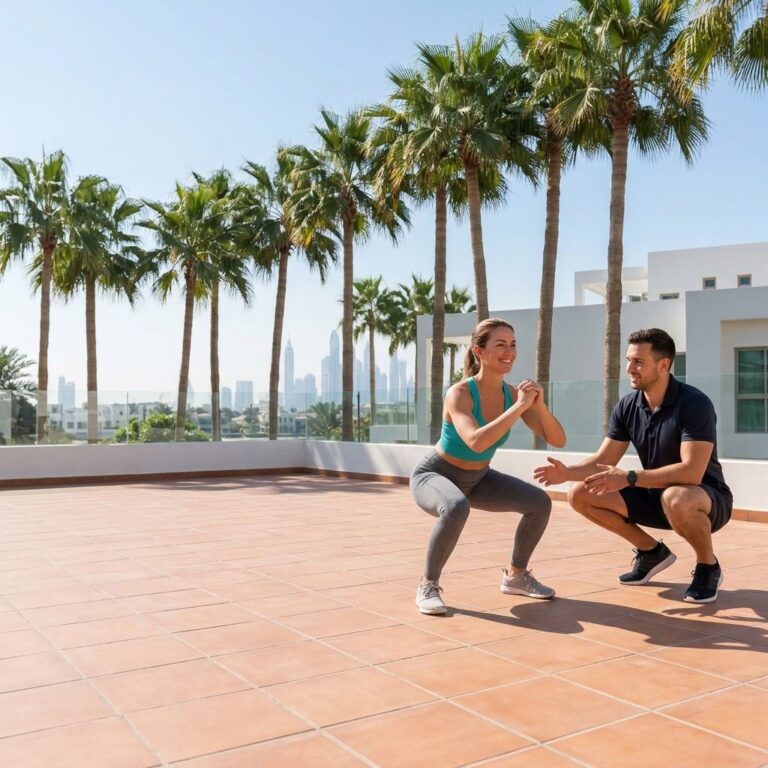
Kids fitness in Dubai is about helping children move, play and feel strong, not about turning them into athletes overnight. With the right approach, a child can build confidence and healthy habits in a fun way. This guide explains what works, how much activity children need and how to train safely in the UAE climate.
Why kids fitness in Dubai matters
Many children in the city spend long hours in classrooms, cars and malls. Meanwhile, screens compete for every free minute. As a result, regular movement can easily disappear from a child’s day.
Active play also teaches social skills such as taking turns, listening and encouraging others, which matter just as much as strength.
Active play supports strength, balance, coordination and mood. It also helps children sleep and focus. For that reason, kids fitness in Dubai is worth planning on purpose, just like homework or school lunches.
How much activity do children need?
The World Health Organization physical activity guidelines recommend an average of at least 60 minutes of moderate to vigorous activity per day for children and adolescents. Strength-building play on three days a week is also encouraged.
That may sound like a lot. However, it does not need to happen in one block. Ten minutes before school, thirty minutes of play after school and a family walk in the evening all count.
Calisthenics: a smart start for kids fitness in Dubai
Calisthenics uses body weight, so it is natural for children. Climbing, hanging, crawling and jumping are movements kids already love. A coach simply gives these movements structure.
- Animal walks such as bear, crab and frog build coordination.
- Hanging from a bar develops grip and shoulder strength.
- Balance games improve posture and body awareness.
- Simple squats and push-ups teach good form early.
Because no heavy weights are involved, the focus stays on technique and fun. This is our approach at YourTurn DXB: we start with how the child feels, then build from there.
A simple 20-minute kids session at home
You do not need a gym. A living room or a shaded balcony is enough. Try this routine two or three times per week.
- Warm-up game (3 minutes): follow-the-leader with marching, skipping and arm circles.
- Animal walks (5 minutes): bear, crab and frog across the room.
- Strength play (6 minutes): wall push-ups, chair squats and a short plank hold.
- Balance challenge (3 minutes): stand on one foot, then try it with eyes looking at one spot.
- Cool-down (3 minutes): slow breathing and a gentle stretch.
Keep the tone playful. Praise effort, not only results. If a child gets bored, change the game rather than pushing harder.
Good kids fitness in Dubai also means respecting rest. Children need sleep, snacks and downtime, so avoid packing every afternoon with classes.
Staying safe in the heat
Summer in the UAE is hot and humid, so outdoor play needs care. Children lose heat differently from adults, and they often forget to drink.
- Choose early morning or after sunset for outdoor sessions between roughly May and September.
- Offer water before, during and after activity.
- Use shade, light clothing and sun protection.
- Move indoors if your child looks flushed, dizzy or unusually tired.
In the cooler months, parks and beaches are wonderful places to play. Even so, always watch for signs that your child needs a break. If your child has asthma, a heart condition or an injury, check with your doctor first.
How to keep kids fitness in Dubai fun and consistent
Children rarely stick to routines that feel like chores. Therefore, make it a game. Use challenges, short goals and small celebrations.
First, let your child choose one activity each session. Next, move together when you can, because children copy what parents do. Finally, track progress with stickers or a simple chart rather than numbers.
Age also matters. Younger children benefit from free, imaginative play. Older children can handle simple structured circuits and gentle skill practice. Teenagers often enjoy learning moves such as handstands or pull-ups. If that sounds like your family, read our beginner handstand guide.
When a coach can help
Parents often ask whether kids fitness in Dubai needs a special programme. It does not, but a clear plan and a friendly coach make it easier to stay consistent.
Some families prefer guidance. A coach can plan safe progressions, correct form and keep sessions engaging. In addition, many children behave differently with someone outside the family, and they try harder.
Our male and female coaches come to your home, park or beach, so you save travel time. You can also compare options with our guide to personal trainer cost in Dubai. Parents who want to train too may enjoy our post on calisthenics for beginners in Dubai.
No coach can promise specific results, and every child develops at their own pace. The goal is a positive relationship with movement that lasts into adulthood.
Frequently asked questions
At what age can children start structured exercise?
Children can enjoy guided play from a very young age. Structured sessions usually suit children from around five or six, as long as they stay playful and short.
Is it safe for kids to do push-ups and squats?
Yes, bodyweight moves are generally safe when done with good form and supervision. Start with easier versions and avoid pushing a tired child to continue.
How long should a kids session last?
For most children, 20 to 40 minutes is plenty. Younger children may need shorter blocks with breaks and water.
Can kids train outdoors in summer?
Only with care. Choose early morning or evening, shade and plenty of water. On very hot days, play indoors instead.
Want a coach to make movement fun for your child? Book a session on WhatsApp and we will arrange a time that suits your family.
Back to home