Handstand for Beginners: A Safe Step-by-Step Guide
Handstand for beginners starts long before you kick up against a wall. First you build wrist strength, shoulder stability and a strong core. Then you practise balance in small, safe steps. This guide gives you a clear path you can follow at home in Dubai.
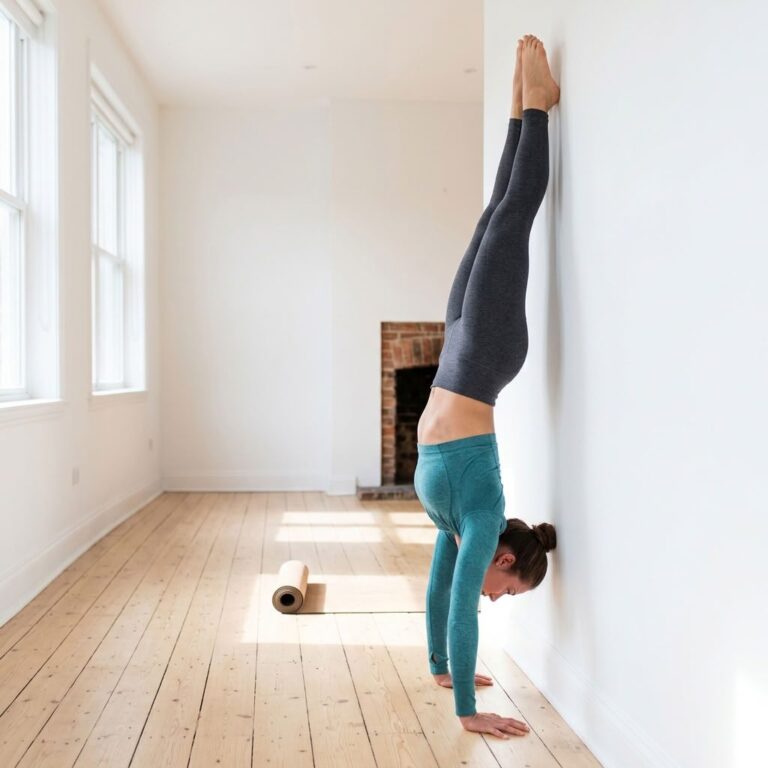
Is a handstand for beginners realistic for you?
For most healthy adults, yes. However, it takes patience. A handstand is a skill, not just a strength test, so progress comes from regular, short practice.
A handstand for beginners plan should always feel sustainable. If a session leaves your wrists sore for days, you did too much.
Some people learn the basics in a few weeks. Others need several months. Both are normal. Because no coach can promise a timeline, focus on steady improvement and enjoy the process.
If you have wrist, neck, shoulder or back problems, or conditions such as high blood pressure, check with your doctor first.
Prepare your body first
Handstands load your wrists, shoulders and core. Therefore, warm up carefully before every session.
- Wrist circles and gentle rocking on hands and knees (1 minute).
- Arm circles and shoulder shrugs (1 minute).
- Cat-cow to wake up your spine (1 minute).
- Plank hold for 20 to 30 seconds.
Next, check your space. Use a clear wall, a non-slip mat and enough room to step out safely. At home in Dubai, a bare floor can get slippery when you sweat, so a mat helps.
Step-by-step handstand for beginners progression
Move to the next step only when the current one feels calm and controlled.
Step 1: Strong plank
Stack your shoulders over your wrists. Push the floor away and squeeze your glutes. Hold for 30 seconds, three times.
Step 2: Pike hold
Lift your hips high to form an upside-down V. Keep your arms straight and your head between them. This position teaches your shoulders to bear weight overhead.
Step 3: Wall walk
Start in a plank with your feet at the base of a wall. Walk your feet up the wall while your hands walk closer. Stop when you feel strong, then walk back down slowly.
Step 4: Chest-to-wall hold
Face the wall in your wall walk position. Push tall through your shoulders and keep your ribs tucked in. Build up to 20 to 30 seconds with good form.
Step 5: Kick-up practice
Place your hands a short distance from the wall. Kick one leg up, then bring the other leg to meet it. Aim for light, controlled kicks rather than big swings.
Step 6: Short freestanding tries
Once your wall holds feel steady, try finding balance for one or two seconds away from the wall. Press your fingertips into the floor to correct a lean. Practise on a soft mat.
Key technique tips for handstand for beginners
Small details make a big difference, so keep these in mind.
- Keep your arms straight and your elbows locked.
- Push through your shoulders so they reach toward your ears.
- Squeeze your glutes and point your toes.
- Look between your hands, not at your feet.
- Spread your fingers wide and grip the floor.
These cues apply to every handstand for beginners drill, from wall holds to short balances.
Moreover, learn how to exit safely. If you fall forward, step out of the move or do a controlled cartwheel. Practise bailing out early, because confidence grows when you know you can come down safely.
How often should you practise?
Short and frequent beats long and rare. Try 10 to 15 minutes, three to four days a week, after your warm-up.
Because handstands are tiring for your shoulders, stop before your form falls apart. Rest days matter too. Also, avoid practising when you feel dizzy or unwell.
In Dubai’s summer, train indoors with air conditioning, and drink water before and after. The World Health Organization physical activity guidelines encourage strength work at least twice a week, so these sessions fit well into your routine.
Common mistakes and quick fixes
- Banana back (arched spine): squeeze your glutes and tuck your ribs in.
- Bent arms: practise pike holds and wall holds with locked elbows.
- Kicking too hard: use smaller kicks, and aim for control.
- Looking at your feet: keep your gaze on the floor between your hands.
If you want to strengthen your upper body for these skills, our guide to your first pull-up is a helpful companion. You may also enjoy calisthenics in Dubai for beginners.
Learning with a coach
Many adults find handstand for beginners sessions more enjoyable with a coach, because the feedback is immediate and the progress is easier to see.
A coach can spot small errors that you cannot feel. For example, they notice a tilted hip or soft elbows right away. They also give you spotting support while your confidence grows.
At YourTurn DXB, we start with how you feel and how your body moves. Our male and female coaches come to your home, park or beach. If you are comparing options, read our guide to personal trainer cost in Dubai.
Frequently asked questions
How long does a handstand for beginners take to learn?
It varies. Some people hold a wall handstand within weeks, while a free handstand can take months. Steady practice and patience matter most.
Do I need to be strong first?
You need basic strength, but you build it along the way. Planks, pike holds and wall holds develop the strength you need.
Is it safe to practise at home?
Yes, when you use a wall, a mat and a clear space. Stop if you feel sharp wrist or shoulder pain, and check with a professional if it persists.
Can I practise handstands after a meal?
It is better to wait. Practising upside down on a full stomach is uncomfortable, so leave a couple of hours after a big meal.
Ready to turn upside down with confidence? Book a session on WhatsApp and a YourTurn DXB coach will guide you step by step.
How to Do Your First Pull-Up: A Step-by-Step Progression
Your first pull-up is one of the most satisfying goals in bodyweight training. It looks simple, yet it asks a lot from your back, arms and grip. The good news is that you can build it step by step with a few smart exercises and regular practice.
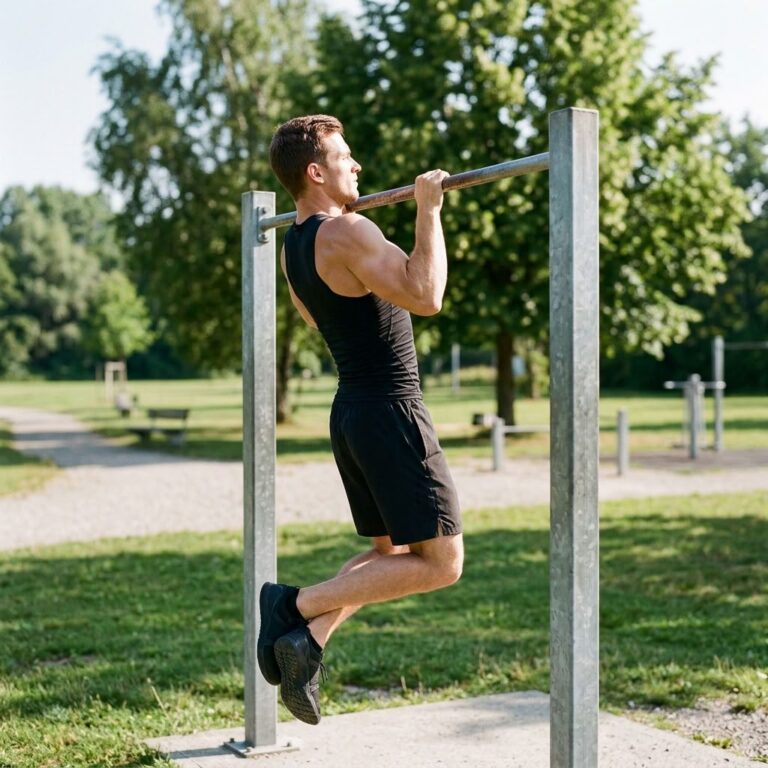
Why your first pull-up feels so hard
A pull-up asks you to lift your entire body weight with your arms and back. For most beginners, that is a big jump from everyday life. Moreover, many people have weaker grip and shoulder strength than they expect.
However, this is a normal starting point, not a limit. With patient training, many adults reach their first pull-up. Nobody can promise exactly when, so focus on small wins along the way.
If you have shoulder, elbow or wrist problems, or a health condition, check with your doctor first.
What you need to get started
You do not need much equipment. A sturdy bar is the main thing, and you can find one in many Dubai parks, outdoor gyms and fitness areas. You can also use a doorway bar at home, as long as it is rated for your weight and installed properly.
- A pull-up bar or strong, safe overhead support.
- A resistance band for assisted practice (optional).
- A sturdy chair or box for negative reps.
- A mat and chalk or a towel if your palms get sweaty.
Humidity can make your hands slippery. Therefore, keep a towel nearby and wipe your palms between sets.
Build strength for your first pull-up: the progression
Train these exercises in order. Move on when you can do the current one with clean form.
1. Dead hang
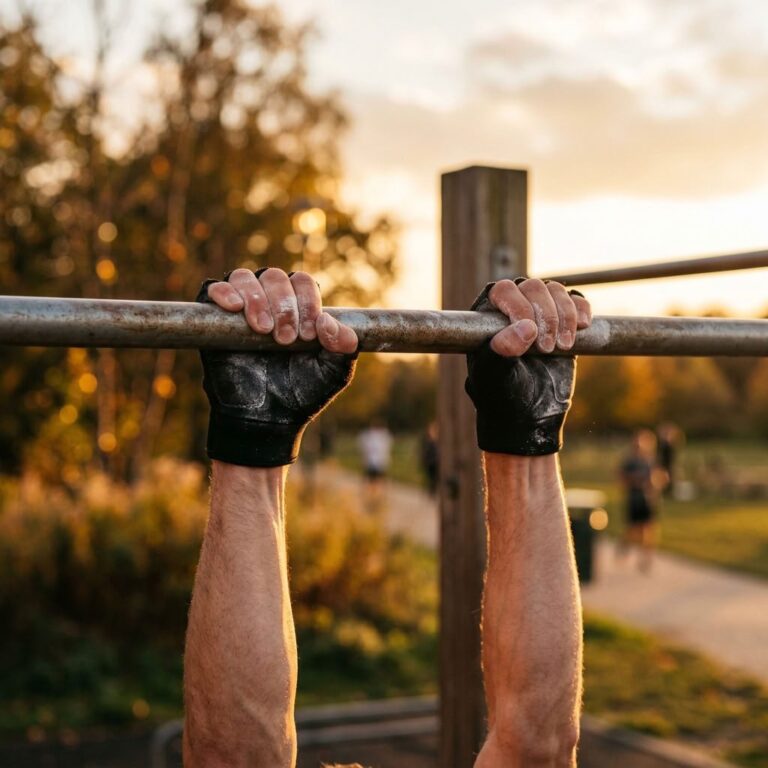
Hang from the bar with straight arms and engaged shoulders. Start with 10 seconds and work up to 30 to 40 seconds. This builds grip and shoulder tolerance.
2. Scapular pull
From a hang, pull your shoulder blades down and back without bending your elbows. Your body rises a few centimetres. Do 3 sets of 6 to 8 reps.
3. Inverted row
Lie under a low bar or sturdy table and pull your chest toward it. Keep your body straight. Make it harder by lowering your body angle.
4. Band-assisted pull-up
Loop a resistance band over the bar and place a foot or knee in it. The band helps you through the hardest part. Use thinner bands as you get stronger.
5. Negative pull-up
Jump or step up so your chin is above the bar. Then lower yourself slowly over 3 to 5 seconds. Negatives teach your muscles to control the full movement.
A weekly plan for pull-up progress
Train the bar two or three times a week, with at least one rest day between sessions. Here is a simple template.
- Warm up for five minutes with arm circles, cat-cow and light hangs.
- Do 3 dead hangs of 20 to 30 seconds.
- Do 3 sets of 5 negative pull-ups.
- Do 3 sets of 8 inverted rows.
- Finish with a gentle chest and lat stretch.
Next, add a few band-assisted reps as your strength grows. Keep sessions short, because tired shoulders make poor form.
Technique tips for a clean rep
Good form protects your joints and makes the movement easier.
- Grip the bar slightly wider than your shoulders.
- Start from a full hang with shoulders active.
- Pull your elbows down toward your ribs, not just your chin up.
- Keep your legs together and your core tight.
- Lower yourself with control, never drop.
Also, breathe out as you pull and breathe in as you lower. If your form breaks down, stop and rest instead of forcing another rep.
Common mistakes that slow your progress
First, many people skip the dead hang. Yet grip is often the weak link.
Second, some train to exhaustion every day. Your muscles need recovery, so rest is part of progress. The World Health Organization physical activity guidelines also recommend strength work on at least two days a week, which fits well here.
Third, people kip or swing to cheat the rep. That may feel easier, but it does not build the strength you want. Finally, do not compare yourself with others. Everyone starts from a different place.
Your lower body and core help too. Try our ideas for a home workout with no equipment on rest days, and read about handstand practice for beginners to build shoulder strength in another way.
Getting help from a coach
A coach can adjust your plan to your body, your schedule and your confidence. They also spot form issues you cannot feel, like swinging legs or shrugged shoulders.
At YourTurn DXB, we start with how you feel, then build strength gradually. Our male and female coaches come to your home, park or beach. To plan your budget, check our guide to personal trainer cost in Dubai.
Frequently asked questions
How long does it take to get a first pull-up?
It depends on your starting strength, body weight and consistency. Some people get there in weeks, others in several months. Steady training matters more than speed.
Can women do a first pull-up too?
Absolutely. With progressive training, many women achieve their first pull-up. The same progressions work for everyone.
Are doorway bars safe?
They can be, if they are installed correctly and suit your weight. Check the manual and test it gently first, or train at a park bar instead.
Should I train until failure?
No. Stop one or two reps before form drops. This keeps your joints happier and lets you recover for the next session.
Ready to earn your first pull-up with a plan? Book a session on WhatsApp and a YourTurn DXB coach will help you get there safely.
Calisthenics in Dubai: A Beginner Guide to Bodyweight Training
Calisthenics in Dubai is a simple, low-cost way to get strong using only your body weight. You can train in a living room, a shaded park or on the beach, with little or no equipment. This beginner’s guide explains what calisthenics is, how to start and how to train safely in the UAE climate.
What is calisthenics?
Calisthenics is strength training with your own body weight. Push-ups, squats, pull-ups, planks and lunges are classic examples.
That is why calisthenics in Dubai suits busy professionals, mums at home and curious teenagers alike. You learn control first, and strength follows naturally.
Moreover, it scales to every level. A beginner can do wall push-ups, while an advanced athlete can work on handstands or muscle-ups. Because you control the leverage, you can make each move easier or harder.
Why calisthenics in Dubai makes sense
Dubai life is busy, and heat limits outdoor time for several months. Calisthenics fits this reality well.
- You can train at home with air conditioning.
- Free outdoor bars exist in many parks and beach areas.
- Sessions can be short, with no commute to a gym.
- The movements improve strength, balance and mobility together.
As a result, many people find calisthenics in Dubai easier to stick with than a traditional gym routine.
Beginner moves to learn first
Start with five basic patterns. Each has an easy version, so everyone can begin safely.
Squat
Sit your hips back and down, then stand. If you need support, hold a chair or sit to a box.
Push-up
Begin on an incline, like a sofa or wall, and lower your chest slowly. Progress to the floor when it feels strong.
Row
Pull your chest toward a low bar or sturdy table while lying underneath. This builds your back and prepares you for pull-ups.
Plank
Hold a straight line from head to heels. Use your knees if you need to, and stop when your form slips.
Lunge
Step one foot back and bend both knees. Keep your chest tall and alternate sides.
Your first week of calisthenics in Dubai
Train three days a week, with a rest day in between. Each session takes about 30 minutes.
- Warm up for five minutes with marching, arm circles and cat-cow.
- Do 3 rounds of 8 squats, 6 incline push-ups, 8 rows and a 20-second plank.
- Rest for 60 seconds between rounds.
- Cool down with slow stretches for your legs, chest and back.
Next week, add a few reps or slow down the tempo. For example, lower for three seconds on each push-up. Small changes keep you progressing without burning out.
If you have a health condition, injury or pain, check with your doctor before you begin.
Training outdoors in Dubai: heat, humidity and timing
From roughly May to September, outdoor midday temperatures are very high. Therefore, plan carefully.
- Train early in the morning or after sunset.
- Drink water before, during and after your session.
- Wear light clothing and use sun protection.
- Move indoors if you feel dizzy, sick or unusually tired.
In the cooler months, parks and beaches are ideal. During Ramadan, many people shift training to after iftar or just before it, so choose a gentle session and listen to your body.
How to progress calisthenics in Dubai safely
Progress comes from doing slightly more over time. You can add reps, slow the tempo, pause at the hardest point or choose a harder variation.
However, do not rush. Pain is a signal to stop, not to push through. Also, sleep, food and rest days all affect how you feel.
The World Health Organization physical activity guidelines recommend regular aerobic activity plus muscle-strengthening work on at least two days a week. Calisthenics covers the strength part nicely.
When you feel ready for a bigger goal, try our guides to your first pull-up or kids fitness in Dubai if you want the whole family to move together.
Working with a coach
Beginners often ask whether calisthenics is too hard at first. It is not, as long as you choose the right starting level and stay patient with your progress.
A coach saves time and prevents common mistakes. For instance, they correct your push-up angle, set the right progressions and keep you motivated.
At YourTurn DXB, we start with how you feel, not only with how much you can lift. Our male and female coaches come to your home, park or beach. Our lead coach, Abdelrahman, has 12 years of calisthenics coaching experience.
Before you decide, read our guide to personal trainer cost in Dubai to compare your options. No coach can guarantee a specific result, but a clear plan makes your effort count.
Frequently asked questions
Do I need equipment for calisthenics in Dubai?
No. You can start with floor exercises and a sturdy chair. Later, a pull-up bar or resistance bands can open up more options.
Can women and mums do calisthenics?
Yes. The moves can be adjusted to any fitness level, and many mums train at home while children play nearby. After pregnancy or a medical issue, check with your doctor first.
Is calisthenics good for beginners?
It is. Each exercise has an easier version, so you can start gently and build strength gradually.
How often should I train?
Two to three sessions a week is a good start. Add rest days and a few easy walks to help your body recover.
Ready to start? Book a session on WhatsApp and a YourTurn DXB coach will meet you wherever you prefer to train.
Gymnastics-Style Strength Training for Adults in Dubai
Gymnastics training for adults Dubai is more beginner friendly than it looks. You do not need to flip or do the splits on day one. You need a clear plan, patient coaching and a safe space to practise.
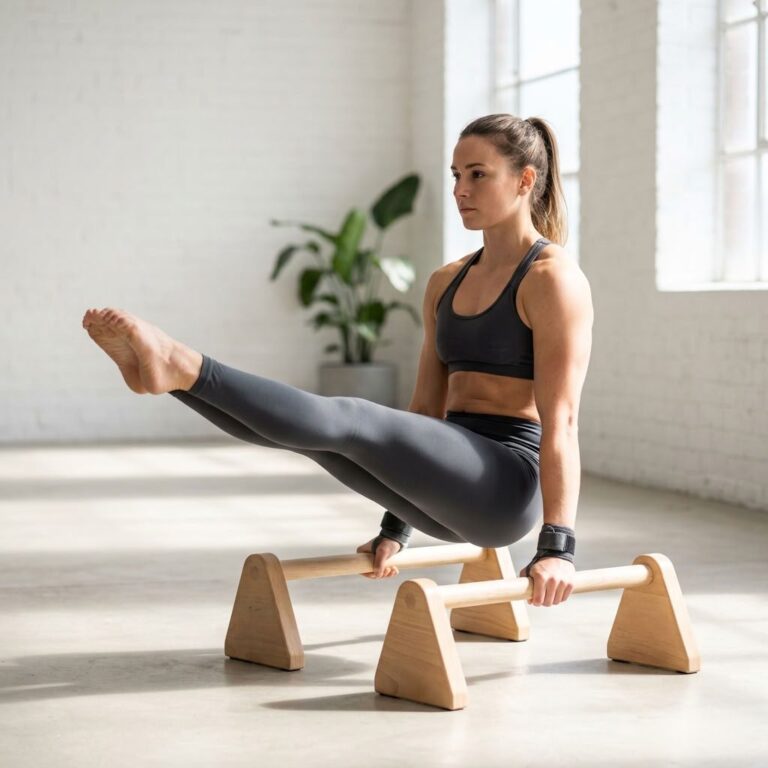
What gymnastics training for adults Dubai coaches actually teach
Gymnastics-style strength is built on a few simple skills. First, you learn to control your own body weight. Next, you learn to move it with balance and care.
At YourTurn DXB, we focus on the basics that make everything else possible. These include:
- Hollow body and arch holds for a strong trunk
- Handstand preparation against a wall
- Push-ups, dips and pull-ups with good form
- Mobility work for wrists, shoulders, hips and hamstrings
- Rolls, balance drills and simple, safe landings
Because every skill has easy steps, each client starts at a level that suits them.
The aim is not to copy an athlete. Instead, the aim is to build strength, balance and confidence that you can use every day. Moreover, you enjoy the process, because every small skill feels like a new achievement.
Why adults enjoy gymnastics-style strength
Many adults feel bored with machines and repeated gym routines. Gymnastics-style work feels different. It gives you a skill to learn, so every session has a clear goal.
It also builds strength that feels useful. You carry, push, pull and balance better in daily life. For example, many clients tell us they enjoy playing with their kids more once they feel stronger and more coordinated.
Finally, progress is easy to see. A wall handstand held for ten seconds is a real win, and it feels great.
Is it too late to start as an adult?
No. Gymnastics training for adults Dubai coaches offer is open to all ages. Adults can learn many gymnastics basics at any stage of life. However, you should start slowly, because tendons and joints adapt more gradually than muscles.
Your coach will match each exercise to your experience, mobility and goals. If you have a health condition or an old injury, check with your doctor first. Then tell your coach, so the plan can be adjusted from the start.
How a beginner programme works
A good plan is simple and steady. Here is how we usually build it.
- Assessment: We check your mobility, strength and any areas that feel tight or uncomfortable.
- Foundations: You practise body position, shoulder control and core strength.
- Skill work: You learn one or two skills at a time, such as a wall handstand or a controlled pull-up.
- Strength: You add push, pull and leg work to support the skills.
- Review: Together, we look at what is improving and what to change next.
Throughout the plan, your coach explains why each exercise matters. As a result, you understand your own body better, and you can practise with confidence between sessions.
Most clients train two to three times a week. Rest days matter too, because that is when your body adapts.
Where to do gymnastics training for adults Dubai clients can access at home
You do not need a gymnastics hall to begin. Our coaches come to your home, a park or the beach. Because of that, you can train near where you live, without a long drive.
A clear wall, a mat and a pull-up bar or sturdy rings are often enough. Indoor sessions work very well in the summer, when the outdoor heat is high. In cooler months, a park or beach session adds fresh air and space.
Meet the people who will guide you on our personal trainers in Dubai page.
A sample week of beginner training
Here is a simple example of how a first month might look. Your coach will adjust it to you.
- Session one: mobility, hollow holds and wall-supported shoulder work
- Session two: push-ups, rows and a gentle handstand drill
- Session three (optional): balance, rolls and a short stretch routine
This is a good example of gymnastics training for adults Dubai residents can fit around work and family. Sessions last about an hour, and the volume grows slowly. Because the load stays manageable, you recover well and stay motivated.
In addition, we ask you to practise a few minutes of wrist and shoulder mobility on non-training days. These small habits protect your joints and speed up your progress.
Staying safe while you learn
Safety comes first in every session. Good coaching keeps each step small and controlled. As a result, your body has time to adapt.
- Warm up your wrists, shoulders and hips every time
- Stop an exercise if you feel sharp pain, and tell your coach
- Do not rush progressions, even if you feel strong
- Drink water and avoid training in the midday heat
The World Health Organization physical activity guidelines also encourage regular strength work for adults. Gymnastics-style training fits that advice well.
Gymnastics training for adults Dubai: cost and commitment
Many people ask what it takes to get started with gymnastics training for adults Dubai coaches provide. The honest answer is regular, short sessions and a little patience. Cost depends on how often you train and where you train, so it is best to plan your budget first.
Our guide to personal trainer cost in Dubai explains what affects the price and what to ask before you book.
If you also want a wider plan, these two posts may help. Read about calisthenics for beginners to build your base. Then see how home personal training in Dubai can fit into your week.
Frequently asked questions
Do I need to be flexible to start?
No. Flexibility improves with practice. Your coach will begin with gentle mobility work and increase the range slowly.
How long until I can do a handstand?
It depends on your strength, body and how often you practise. Some people hold a wall handstand within weeks. Others need a few months. Steady practice matters more than speed.
Can I train gymnastics-style at home?
Yes. With a wall, a mat and a few simple tools, you can do many basics at home. A coach can check your form and keep you safe.
Is it safe if I am older or out of shape?
Often yes, when you start slowly with a qualified coach. Check with your doctor first if you have a health condition or injury. Then your coach can adjust every exercise.
Ready to learn something new? Book a session on WhatsApp and tell us your goals. We will build a first step that feels right for you.
Weight Loss in Dubai: A Realistic Plan With a Personal Trainer
Weight loss in Dubai is easier to manage when your plan fits your real life. Long work days, summer heat and eating out can all get in the way. A realistic plan works with these things, not against them.
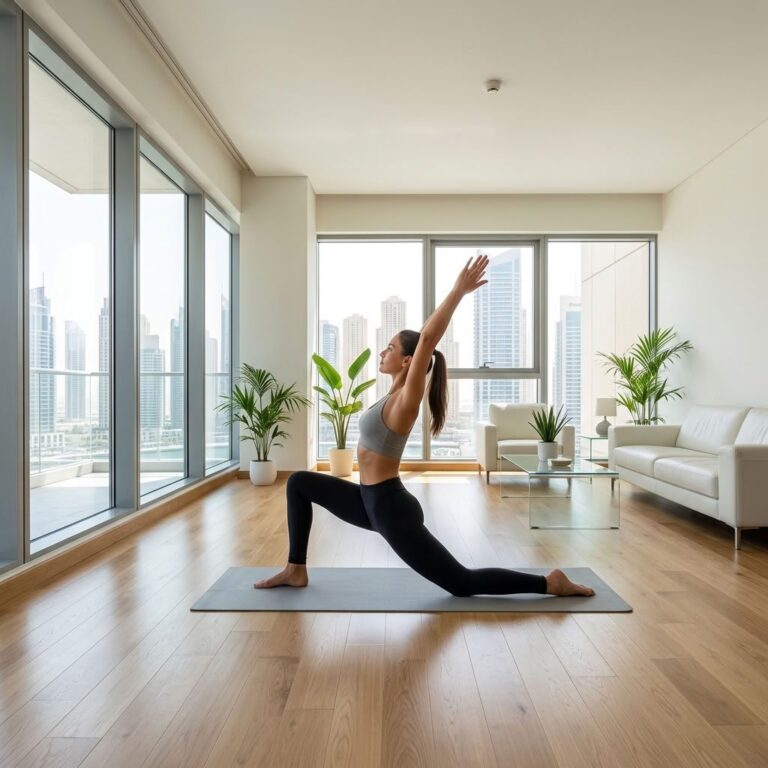
Why weight loss in Dubai feels hard for many people
Dubai has a lot of great food, and many people eat out often. In addition, the summer heat makes outdoor exercise hard for months. As a result, many people stop moving and lose their routine.
Stress is another big factor. Busy schedules lead to skipped meals, late dinners and little sleep. Because of this, willpower alone rarely works.
The good news is that small, steady changes add up. You do not need a perfect plan. You need one you can repeat.
Start with your mind, not the scale
At YourTurn DXB, we use mind-first coaching. First, we ask how you feel about food, your body and your energy. Then we build habits around the answers.
This matters because habits follow feelings. If you feel guilty after a meal, you may give up the whole week. However, if you feel calm and supported, you are more likely to continue.
Try these questions before you begin:
- Why do I want to lose weight right now?
- What has stopped me in the past?
- Which habit feels easiest to change first?
Build a realistic plan for weight loss in Dubai
A realistic plan has three parts: movement, food and recovery. Keep each part simple, and change one thing at a time.
- Move on most days. Aim for regular strength training and daily walking.
- Eat enough protein and vegetables. These help you feel full and support your muscles.
- Sleep well. Poor sleep makes hunger and cravings harder to control.
- Track one habit. For example, count your daily steps or glasses of water.
The World Health Organization physical activity guidelines give a helpful base for how much activity adults need each week. Your coach can turn that advice into a plan that suits you.
Training that supports weight loss in Dubai
Strength training is a strong choice. It builds muscle, and muscle helps your body use energy well. Moreover, bodyweight exercises such as squats, push-ups and rows need no gym.
Cardio helps too. Walking, cycling or light interval work all count. However, you should choose what you enjoy, because enjoyment keeps you consistent.
Here is a simple weekly example:
- Two or three strength sessions with your coach
- Two walks of 30 to 40 minutes
- One light activity day, such as stretching or a swim
- One full rest day
Our coaches come to your home, a park or the beach, so there is no commute to slow you down. You can meet them on our personal trainers in Dubai page.
Eating well in Dubai without giving up your lifestyle
You do not have to stop eating out. Instead, learn a few simple choices that work in most restaurants.
- Choose grilled or roasted dishes more often than fried ones
- Ask for sauces on the side
- Add a salad or vegetables to every main meal
- Share desserts, and enjoy them without guilt
- Drink water through the day, especially in hot weather
During Ramadan or family gatherings, eat slowly and listen to your hunger. Because food is part of culture and joy, a balanced approach lasts longer than a strict one.
If you have a health condition, take medication or are pregnant, check with your doctor before changing your diet or exercise.
Common mistakes that slow weight loss in Dubai
Many people make the same few mistakes. Spotting them early saves you time and effort.
- Crash diets that you cannot keep for more than two weeks
- Skipping breakfast or lunch, then overeating at night
- Judging progress by the scale alone
- Training very hard in the heat without enough water
- Comparing yourself with others, not with yourself a month ago
For that reason, we focus on small steps that you can repeat. They feel lighter, and they last longer.
Handling the heat and a busy schedule
In summer, train indoors or very early in the morning. At home, short sessions work well. Even 30 minutes of focused effort is useful.
In cooler months, parks and beaches give you space and fresh air. Whichever you choose, drink water before, during and after training.
For busy days, use a minimum plan. For example, do ten minutes of squats and push-ups, then go for a short walk. Something small is better than nothing, and it protects your routine.
How to measure progress for weight loss in Dubai
The scale is only one tool. Weight changes daily with water, food and sleep. Therefore, track other signs as well.
- How your clothes fit
- Your energy during the day
- Your strength, such as more push-ups or longer walks
- Your mood and sleep quality
Progress is rarely a straight line. If a week goes badly, restart with the next meal. Our guide to personal trainer cost in Dubai can help you plan support that fits your budget.
You may also like our posts on weight loss for women at home and mind-first coaching.
Frequently asked questions
How fast can I lose weight safely?
A slow and steady pace is usually safer and easier to keep. Results differ for every person, so no coach can promise a number. Your doctor can advise you on a healthy goal.
Do I need a gym for weight loss in Dubai?
No. You can train at home, in a park or on the beach with bodyweight exercises and simple tools. What matters most is regular practice.
Is cardio better than strength training?
Both help. Strength training builds muscle, and cardio supports your heart and stamina. A mix of the two is a good, balanced choice.
What if I keep falling off my plan?
This is very common. Make the plan smaller, and focus on one habit. A coach can also keep you accountable and supportive.
Ready to begin? Book a session on WhatsApp and tell us your goals. We will build a simple plan that fits your week.
How to Train in Dubai Summer Heat Safely
Train in Dubai summer heat safely by changing the time, place and pace of your workouts. The weather can be very hot and humid, so smart choices matter. With a few simple rules, you can stay active all summer.
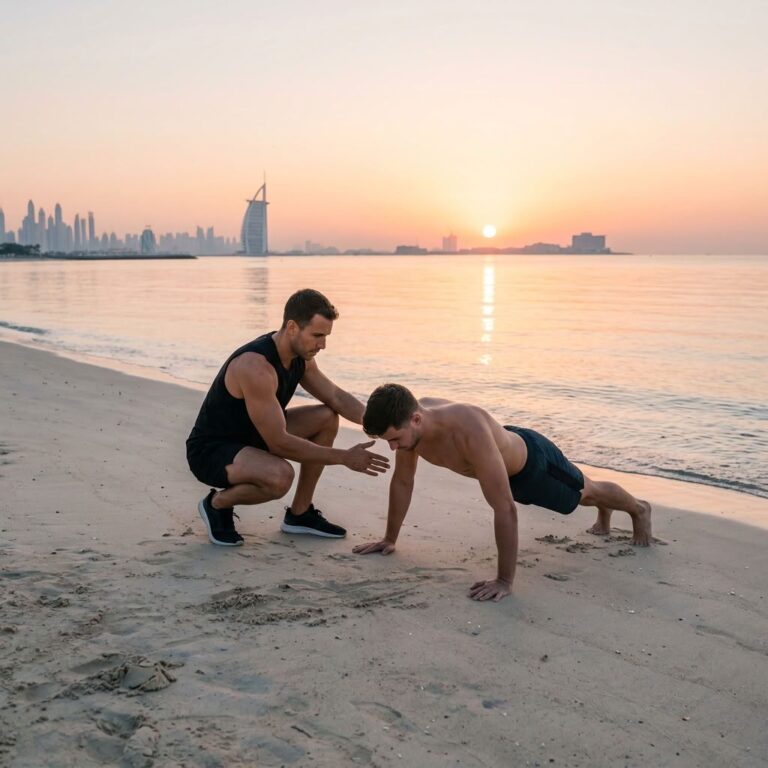
Why it is harder to train in Dubai summer heat
In summer, temperatures in Dubai are often very high, and humidity can make it feel even hotter. When you exercise, your body makes extra heat. Sweat helps you cool down, but in humid air it dries more slowly.
As a result, your heart works harder and you tire faster. This does not mean you must stop training. It means you should adjust your plan.
If you have a health condition, take medication or have had a heat-related problem before, check with your doctor first.
The best times to train in Dubai summer heat
Timing is the biggest change you can make. Avoid the middle of the day, when the sun is strongest.
- Early morning: Train around sunrise, when the air is cooler.
- Late evening: Train after sunset, but remember that humidity may still be high.
- Indoors: Use an air-conditioned room at any time of day.
Even in the evening, the air can feel heavy. Therefore, always test how you feel in the first ten minutes, and lower the effort if needed.
Move your workout indoors
Indoor sessions are the safest choice during the hottest months. Our coaches come to your home, so you do not need to travel to a gym in the heat.
A small space is enough. For example, you can do squats, lunges, push-ups, rows with a band and core work. Open a window only if the air is not too hot, and keep a fan or the air conditioning on.
Meet the people who will guide you on our personal trainers in Dubai page.
Hydration and clothing
Water is the first tool for staying safe. Start drinking before you train, not after you feel thirsty.
- Drink water through the day, so you start well hydrated.
- Sip small amounts during your session.
- Drink again afterwards, and eat a balanced meal.
- If you sweat a lot or train for a long time, ask your doctor or coach about electrolytes.
Next, wear light, loose clothes made of breathable fabric. Light colours reflect more heat. Also, use sunscreen and a cap if you are outside.
Warning signs: when to stop
Listen to your body. Stop at once if you feel any of these signs:
- Dizziness or feeling faint
- Headache or nausea
- Very heavy sweating, or sweating that suddenly stops
- Muscle cramps
- Confusion or a very fast heartbeat
Move to a cool place, sit down and sip water. If symptoms are strong or do not improve, seek medical help straight away. Heat illness can be serious, so do not ignore it.
The World Health Organization physical activity guidelines remind us that regular movement is good for health. In hot weather, you can still meet that goal with shorter and cooler sessions.
How to adjust your plan to train in Dubai summer heat
To train in Dubai summer heat well, you do not need to be as intense as in winter. Instead, aim to keep your routine going.
- Shorten sessions to 30 or 40 minutes
- Take longer rests between sets
- Choose low-impact options, such as bodyweight strength work
- Replace long runs with walks in a cool place or a swim
- Give yourself extra rest days if you feel tired
Also, give your body time to adapt. Heat adaptation takes days or weeks, so build up slowly. Your coach can guide each step and adjust the plan on tough days.
Cost often worries people who want regular support. Our guide to personal trainer cost in Dubai explains what to expect and what to ask.
A sample cool-weather routine for summer
Here is a simple 35-minute indoor session. It shows how you can train in Dubai summer heat without feeling overwhelmed.
- Five minutes of easy mobility and marching in place
- Three rounds of squats, push-ups and band rows, with 40 seconds of work and 30 seconds of rest
- Five minutes of core work, such as planks and dead bugs
- Five minutes of slow breathing and stretching
Keep a bottle of water nearby, and pause whenever you need to. Moreover, finish feeling good, not exhausted. That way you will want to come back to the next session.
Keep your mind strong in summer
Many people lose motivation in summer. This is normal, and it is fixable. Because it is hot, they skip a few sessions, and then they stop. To avoid this, set a small minimum, such as three short sessions a week.
It also helps to have someone waiting for you. A coach at your door makes it much easier to start. For more ideas, read home workouts in Dubai and mind-first coaching.
Frequently asked questions
Is it safe to exercise outside in summer in Dubai?
It can be safe early in the morning or late in the evening if you take care. However, midday outdoor training is not a good idea. Indoor sessions are the safest option.
How much water should I drink?
Needs differ from person to person. Drink regularly through the day and sip during training. Your doctor can give personal advice, especially if you have a health condition.
Can I still lose weight if I train indoors?
Yes. Strength training and walking indoors both support a healthy routine. Consistency matters more than where you train.
What should I do if I feel dizzy?
Stop, move to a cool place and sit down. Sip water and rest. Seek medical help if you do not feel better soon.
Want a cool, safe summer routine? Book a session on WhatsApp and we will plan indoor workouts that fit your home and your schedule.
Ramadan Workouts in Dubai: How to Train While Fasting
Ramadan workouts in Dubai can be safe, simple and very rewarding. Fasting changes your energy, sleep and routine, so your training should change too. With the right timing and a gentle plan, you can stay active while you fast.

Why Ramadan workouts in Dubai need a different plan
During Ramadan, you do not eat or drink from dawn until sunset. As a result, your energy is often lower, especially late in the afternoon. Sleep patterns also change because of late nights and early meals.
Therefore, the goal is not to break records. Instead, the goal is to keep your strength, protect your mood and feel good. Many people find this a refreshing change.
If you have a health condition, take medication or are pregnant, check with your doctor before you train while fasting.
The best times for Ramadan workouts in Dubai
Choosing the right time is the most important step. A calm session after iftar, with some stretching at the end, also helps you unwind after a long fasting day. Each option has its pros and cons, so pick the one that suits you.
- After iftar (about one to two hours later): You have eaten and had water, so your energy is better. This is the most popular time for harder sessions.
- Before iftar: Light training is possible, but you may feel thirsty or tired. Keep it short and easy.
- Before suhoor: Some people train late at night, then eat suhoor. Make sure you still get enough sleep.
- After taraweeh: Late sessions can work well if your schedule allows it.
Because work hours often change in Ramadan, many clients prefer a short home session in the evening. Our coaches can adjust the time to your day.
How to train while fasting
When you train, lower the volume and the intensity. This keeps you safe and helps you recover.
- Shorten the session. Aim for 30 to 45 minutes.
- Lower the effort. Keep a pace where you can still talk.
- Focus on strength basics. Squats, push-ups, rows and core work are ideal.
- Rest more. Take longer breaks between sets.
- Stop if you feel unwell. Dizziness, a headache or nausea are signs to rest.
Moreover, you do not need to train every day. Three sessions a week are enough to maintain your strength and your routine.
Eating and drinking between iftar and suhoor
Good food and water make Ramadan workouts in Dubai much easier. You have a limited window, so use it well.
- Break your fast with water and dates, then eat a balanced meal
- Include protein, vegetables and slow-release carbohydrates
- Drink water steadily between iftar and suhoor, not all at once
- Eat a filling suhoor with protein, fibre and healthy fats
- Limit very sugary and deep-fried foods
These simple habits support your energy and help you sleep better. Because everyone is different, ask your doctor for personal advice if needed.
Protect your sleep and your mind
Sleep often suffers in Ramadan. However, poor sleep makes training feel harder and lowers your mood. So try to rest when you can, even with a short nap in the afternoon.
At YourTurn DXB, we use mind-first coaching. This means we ask how you feel before we plan the session. On a tired day, your workout might be a gentle walk and some stretching. That is still a win.
The World Health Organization physical activity guidelines highlight that any movement counts. Therefore, light activity in Ramadan is valuable.
Common mistakes to avoid in Ramadan
A few habits can make training harder than it needs to be. Fortunately, they are easy to fix.
- Training too hard in the first week, then burning out
- Skipping suhoor, which leaves you with very little energy
- Drinking too little water between iftar and suhoor
- Eating a very large meal right before a workout
- Feeling guilty about a missed session instead of simply restarting
Instead, start gently and let your body adapt over the first few days. Ramadan workouts in Dubai work best when you stay flexible. A short walk on a hard day still keeps your habit alive.
A simple weekly plan for Ramadan workouts in Dubai
Here is an example you can adapt. Your coach will adjust it to your goals and your day.
- Day 1: Full-body strength after iftar, 35 minutes
- Day 2: Gentle walk and stretching
- Day 3: Lower-body and core session, 30 minutes
- Day 4: Rest
- Day 5: Upper-body strength, 35 minutes
- Day 6 and 7: Rest or a light walk
Our coaches come to your home, a park or the beach, so you save time and energy on travel. Meet them on our personal trainers in Dubai page.
If you want to compare options, our guide to personal trainer cost in Dubai explains what affects the price. You may also like our post on training in the summer heat, since Ramadan sometimes falls in warm months.
Frequently asked questions
Is it safe to exercise while fasting?
For many healthy adults, light to moderate exercise is fine when done carefully. However, you should check with your doctor if you have a health condition. Stop right away if you feel unwell.
Should I train before or after iftar?
After iftar is usually easier, because you have food and water in your body. Light sessions before iftar can also work. Choose what feels best for you.
Will I lose muscle in Ramadan?
Short, regular strength sessions and enough protein help you keep your muscle. No one can promise exact results, but a steady routine helps a lot.
How often should I train?
Two to four sessions a week are enough for most people. Rest days are important, especially when your sleep is lighter.
Want a gentle, safe plan for the month? Book a session on WhatsApp and we will build a routine around your fasting day.
Why Motivation Fades and How Mind-First Coaching Helps You Stick With It
Mind-first coaching starts with how you feel, not with how hard you can train. It treats your thoughts, stress and energy as part of your fitness plan. As a result, you stay consistent for longer, and training feels lighter.
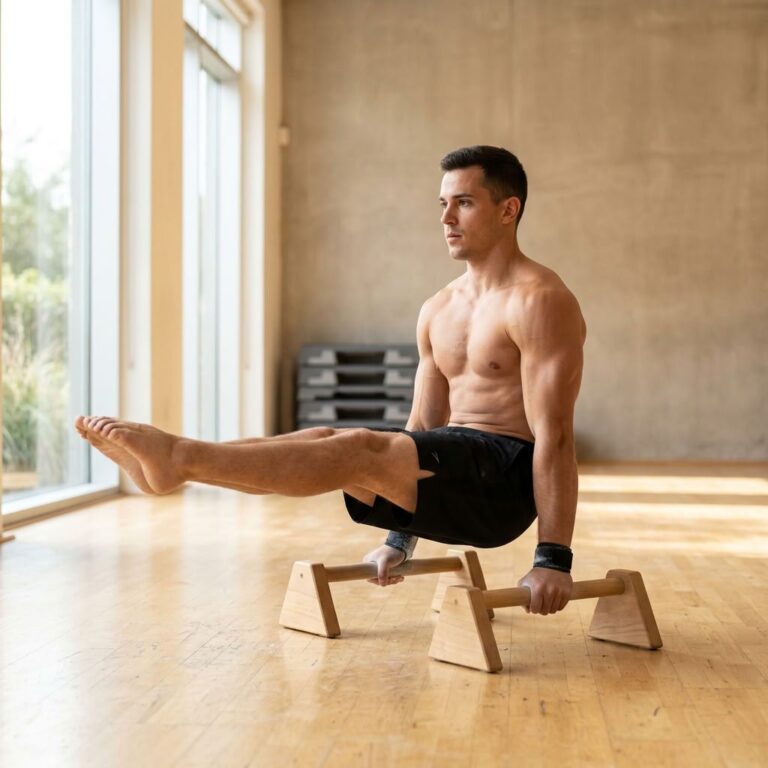
What mind-first coaching really means
Most programmes begin with exercises and numbers. Mind-first coaching begins with a conversation. First, your coach asks about your day, your sleep, your mood and your past experience with exercise.
Then, the coach builds a plan around your answers. For example, a stressed parent may need a short, calm session. Someone full of energy may be ready for a stronger workout.
It also teaches you to listen to your body. You learn when to push and when to ease off, and that skill helps in training and in daily life.
This is not therapy, and it does not replace medical advice. It is a coaching style that respects the person behind the body.
Why most people stop training
Many people start with great motivation, then stop after a few weeks. Rarely is the reason a lack of knowledge. More often, the reason is how they feel.
- They feel guilty after a missed session
- They feel tired, stressed or busy
- They compare themselves with others
- They set goals that are too big, too fast
- They feel judged or alone
Because these feelings are so common, a good plan must deal with them. That is exactly where mind-first coaching helps.
How mind-first coaching keeps you consistent
Consistency comes from habits that feel easy and kind. Here are the main ways this approach supports you.
- It starts small. A ten-minute session on a hard day is still a win.
- It adapts to your energy. Your coach changes the plan when you are tired or stressed.
- It builds confidence. You learn skills step by step, so you feel capable.
- It removes guilt. A missed session is simply information, not failure.
- It gives you support. Someone cares whether you show up.
Over time, these small wins become a routine. Moreover, you begin to trust your body and your own decisions.
What a mind-first coaching session looks like
Every session follows a simple flow. It stays flexible, because people change from day to day.
- Check-in: A short chat about your energy, sleep and mood
- Warm-up: Gentle movement and breathing to settle in
- Main work: Strength, mobility or skill practice, adjusted to how you feel
- Cool-down: Stretching and a moment to notice what went well
- Plan: A small, clear goal for the next few days
Our coaches come to your home, a park or the beach. Because you train in a place you know, it is easier to relax and focus. You can meet them on our personal trainers in Dubai page.
Who benefits most from mind-first coaching?
Almost anyone can benefit. However, some groups find it especially helpful.
- Beginners who feel nervous about exercise
- Busy mums and dads who have little time and energy
- People who have tried to lose weight before and felt discouraged
- Seniors who want to move with confidence
- Kids and teens who need a fun, pressure-free start
If you want to see how this works for weight goals, read our post on weight loss in Dubai. For a practical routine at home, see home personal training in Dubai.
Common myths about this approach
Some people expect this style to be soft or slow. In reality, that is not the case.
- Myth: it is only for people who feel low. In fact, anyone who wants lasting habits can benefit.
- Myth: it means no hard work. You still build real strength, and you still challenge yourself.
- Myth: it takes more time. Sessions are the same length. The difference is how they are planned.
The common thread is respect. Your coach listens first, so the work you do is work you can keep doing.
Simple habits you can try today
You do not need a coach to begin. These small steps can help you right now.
- Before you train, take three slow breaths and ask how you feel.
- Choose a minimum session, such as ten minutes of walking or squats.
- Write down one thing that went well after each session.
- Schedule workouts like appointments, and protect that time.
- Talk to yourself kindly, as you would to a friend.
These habits are simple, but they work because they lower the pressure. Furthermore, they make it easier to return after a break.
The World Health Organization physical activity guidelines remind us that regular movement supports both body and mind. If you have a health condition or injury, check with your doctor before starting a new routine.
Is mind-first coaching worth it?
Many people ask whether coaching is worth the money. The answer depends on your goals, your budget and how much support you need. Because support helps you stay consistent, many clients find it valuable.
To plan your budget, read our guide to personal trainer cost in Dubai. It explains what affects the price and what to ask before you book.
Frequently asked questions
Is mind-first coaching the same as therapy?
No. It is a coaching style that pays attention to how you feel while you train. It does not diagnose or treat any condition. If you need mental health support, please speak with a qualified professional.
Will I still work hard?
Yes, when it suits you. Some days you will train hard, and other days you will go lighter. The goal is steady progress, not constant maximum effort.
Can I try this at home?
Yes. Our coaches visit your home, so you can train in a comfortable space. A small area and a few simple tools are often enough.
How long until I feel a difference?
Everyone is different, so no one can promise a timeline. Many people notice better mood and energy as they build a regular routine. Patience and consistency help the most.
Ready to feel better while you train? Book a session on WhatsApp and tell us how you feel. We will start from there.
How Much Does a Personal Trainer Cost in Dubai?
Personal trainer cost in Dubai is one of the first questions people ask us, and it is a fair one. Prices vary a lot across the city, and it is hard to compare options when each coach offers something different. This guide explains what shapes the price so you can decide with confidence.

Why personal trainer cost in Dubai varies so much
There is no single price for personal training here. Dubai has gym-based coaches, freelance trainers, boutique studios and home-visit teams. Each model has different running costs, and those costs shape what you pay.
For example, a coach who works inside a gym may pay for floor access. A coach who travels to your home spends time and fuel getting there. A studio pays rent. Because of this, two sessions that look similar on paper can have very different prices.
We do not publish fixed prices in this article, because the right plan depends on your goals and schedule. Instead, we focus on the factors, so you can compare fairly.
The main factors behind personal trainer cost in Dubai
Several things move personal trainer cost in Dubai up or down. Knowing them helps you ask better questions.
- Coach experience: a coach with many years of practice usually charges more than someone just starting out.
- Location: training at your home, a park or a beach is different from training in a gym.
- Session length: 45, 60 and 90 minute sessions are priced differently.
- Frequency: more sessions per week often means a lower cost per session.
- Specialisation: coaching for kids, seniors, pregnancy recovery or advanced skills can need extra training.
- Package size: buying a block of sessions is usually better value than paying one at a time.
Home training versus gym training
Many people assume home training is more expensive. However, the full picture is more balanced. At home, you do not pay for a gym membership, parking or travel time. You also save the time you would spend commuting in Dubai traffic.
In addition, the coach brings the equipment, so you do not need to buy anything big. Calisthenics and bodyweight training need very little space. A small area of your living room is often enough.
On the other hand, a gym gives you machines and heavy weights. If you want those, a gym may suit you better. It depends on your goal and how much you enjoy the environment.
What is included in a good package
Personal trainer cost in Dubai only makes sense when you know what you get for it. Before you commit, check what the package covers.
- An opening conversation about your goals, your health and your lifestyle.
- A plan that fits your level, not a copy of a generic programme.
- Coaching during each session, with clear technique correction.
- Progress checks, so you can see what is working.
- Support between sessions, such as simple advice on habits.
At YourTurn DXB, we start with how you feel, not only with numbers on a scale. That mind-first approach shapes everything we plan. You can meet the people behind it on our coaches page.
How to judge value, not only price
A low personal trainer cost in Dubai does not always mean a good deal. If the sessions are rushed or the plan is generic, you may pay less and still get little. Likewise, a high price does not guarantee quality.
Instead, look for signals of real value. Does the coach listen first? Do they explain why each exercise matters? Do they adapt when you feel tired or stressed? Good coaching feels personal.
It also helps to be honest about what you can commit to. Two well-planned sessions a week that you actually attend beat five sessions you keep cancelling. Consistency drives progress, and no one can promise a result for you.
Questions to ask before you book
A short conversation can save you from surprises. Here are useful questions to ask any trainer in the city.
- How long is each session, and does travel time count inside it?
- Are there extra charges for certain locations?
- What happens if I need to reschedule?
- Is there a trial or intro session?
- How do you adjust the plan if I get injured or busy?
Clear answers show a coach who respects your time and money. If the answers are vague, take that as a sign to keep looking. For a wider look at related decisions, read our post on home personal training in Dubai and our guide to calisthenics for beginners.
Planning a budget around personal trainer cost in Dubai
Start by deciding how many sessions per week you can keep up for at least three months. Next, think about the type of coaching you need. A beginner often benefits from more guidance at first, then fewer sessions once habits are set.
Moreover, remember that training is not only about sessions. The World Health Organization suggests adults aim for regular weekly physical activity, so some of your movement can be free walks or workouts you do on your own. You can read the World Health Organization physical activity guidelines for general targets.
For a deeper breakdown of the topic, see our guide to personal trainer cost. Always check with your doctor first if you have a health condition or injury.
Frequently asked questions
Is personal training worth the money?
For many people, yes, because a coach gives structure, safe technique and accountability. However, it only works if you attend and follow the plan. Think of it as paying for guidance and consistency.
Does the price change in summer?
Dubai summers are hot and humid, so many clients move outdoor sessions indoors, such as to the living room. The format changes, but the coaching stays the same. Ask your coach how they handle the heat.
Can I pay per session or do I need a package?
This depends on the coach. Packages often give better value per session, while a single session is a good way to try a coach first. Ask before you book.
How do I get a quote?
The easiest way is to message us with your goal, your area and your preferred days. We will suggest a plan that fits you.
Ready to talk about your goals and your budget? Book a session on WhatsApp and we will help you choose a plan that suits you.
Home Personal Training for Busy Women and Moms in Dubai
Home personal training for women in Dubai gives you a private, flexible way to get stronger without leaving your house. A coach comes to you, so there is no commute, no crowded gym and no need to arrange childcare. This guide explains how it works and how to start.
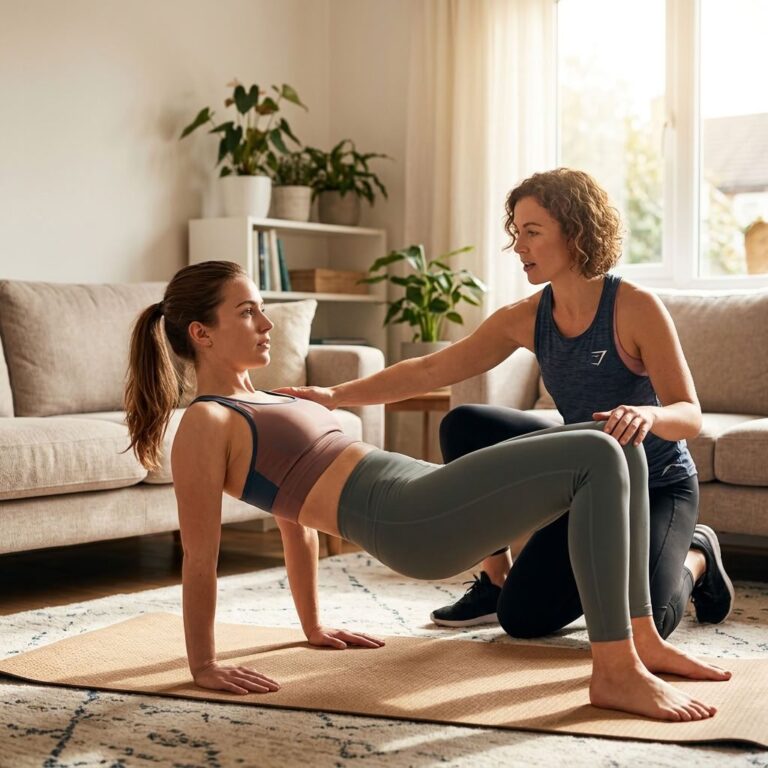
Why home personal training for women in Dubai works so well
Life in Dubai is busy. Between work, school runs, family and the heat, finding time for the gym can feel impossible. Training at home removes most of those barriers.
First, you save travel time. Next, you train in a space where you feel comfortable. Finally, your coach plans the session around your day, not the other way around.
Many women also tell us they feel more relaxed without an audience. Privacy helps you focus on how your body feels, and that is where good progress begins.
Who it is for
Home personal training for women in Dubai suits many women. It is especially popular with a few groups.
- Busy professionals who want a short, focused session at the end of a long day.
- Moms who cannot leave the children, or who want the kids nearby.
- Beginners who feel nervous about walking into a gym.
- Women who prefer a female coach for comfort and privacy.
- Women returning to exercise after a break, a move or a new baby.
If you are recovering from pregnancy or have an injury, speak to your doctor first. A good coach will also ask about this before the first session.
What a home session looks like
A session usually lasts 45 to 60 minutes. It starts with a short chat about your energy, your mood and any aches. Then you warm up and move into the main work.
The main work often mixes strength, mobility and simple conditioning. We use bodyweight movements, bands and light equipment, so you do not need a full home gym. A yoga mat and a little floor space are often enough.
At the end, you cool down and stretch. Your coach then explains what you did and what comes next. Because the plan is personal, each session builds on the last one.
A mind-first approach to home personal training for women in Dubai
At YourTurn DXB, we begin with how you feel, not only with how you look. Some days you have energy, and some days you do not. Therefore, a good plan adapts.
For example, if you slept badly or the day was stressful, we may choose gentler movement. On a strong day, we push a little more. This keeps you consistent, and consistency is what changes your body over time.
You can meet the women and men who coach with us on our coaches page. If you prefer a female coach, tell us when you message.
Training at home with kids around
Moms often worry that children will make training impossible. In practice, it can work well. Younger children can play nearby, and older children may join a simple warm-up.
In addition, shorter sessions work fine. Thirty focused minutes done regularly beat a perfect hour you never find time for. Your coach can plan around nap times and school hours.
Safety also matters. We keep the floor clear and choose movements that suit the space. If you want to compare options, read our post on calisthenics for women and our guide to weight loss training at home.
Dubai heat and your home routine
Summer in Dubai is hot and humid. Because of this, indoor home sessions are very practical from about June to September. Air conditioning keeps you comfortable and safe.
In cooler months, you can move sessions to a park or the beach if you like. Early morning and evening are the best times outdoors. Always drink water before, during and after training.
During Ramadan, we adjust timing and intensity. Many clients prefer a lighter session after iftar. Your coach will plan this with you.
How much does it cost and how do I start?
The price of home personal training for women in Dubai depends on session length, the number of sessions per week and your goals. We explain the main factors in our guide to personal trainer cost. This helps you plan before you commit.
To start, follow these simple steps.
- Message us with your goal, your area and your preferred days.
- Tell us about any injury or health condition.
- Choose a coach and a time that suits you.
- Begin with a first session and see how it feels.
The World Health Organization recommends regular weekly activity for adults, including strength work. You can read the World Health Organization physical activity guidelines for general targets. Results differ for everyone, so we never promise a specific outcome.
Frequently asked questions
Do I need equipment at home?
No. Your coach brings what is needed, and many exercises use only your bodyweight. A mat and a clear patch of floor are enough to begin.
Can I train with a female coach?
Yes. We have both male and female coaches, and you can request the one you prefer. Just let us know when you book.
Is it suitable for beginners?
Yes. We start at your level and progress slowly. Nobody expects you to be fit already, and we explain every movement.
Can I train after having a baby?
Many women do, but you should check with your doctor first. Once you have approval, we can plan gentle sessions that rebuild strength step by step.
Ready to try home personal training for women in Dubai? Book a session on WhatsApp and take your first step at your own pace.
Back to home