Animal Flow Explained: Mobility and Strength on the Floor
Animal Flow is a floor-based bodyweight system that blends strength, mobility and coordination into smooth, flowing movements. You crawl, reach, rotate and shift your weight in ways that feel playful and a little different from a normal workout. This guide explains the basics and how to begin in Dubai.
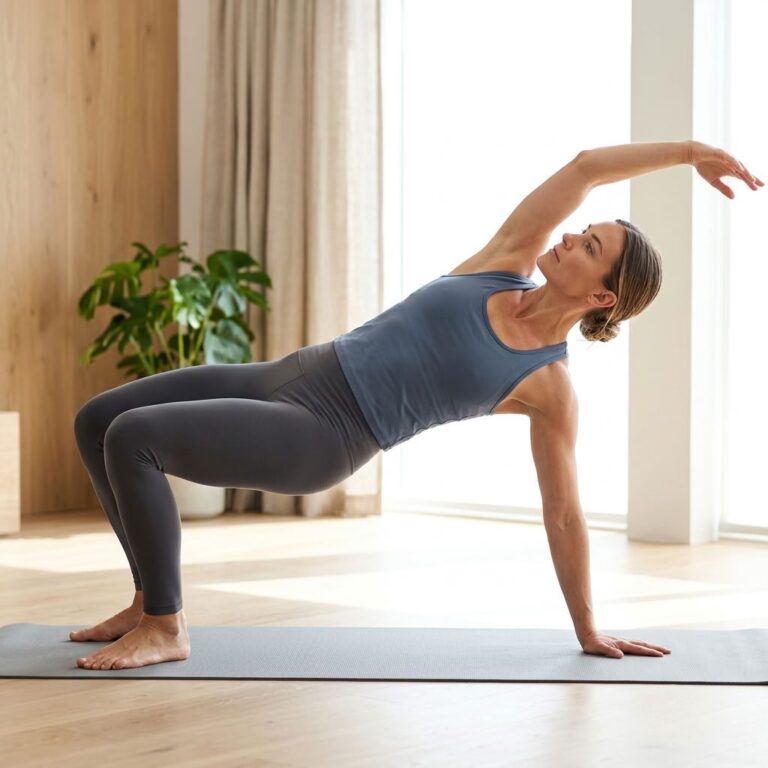
What is Animal Flow?
Animal Flow is a training style where you move close to the ground, often on your hands and feet. The movements are inspired by animals, which is why many positions have names like Beast, Crab and Ape.
You do not lift weights. Instead, you use your own bodyweight and link the moves together in sequences. As a result, the session feels more like a flowing dance than a gym set.
The system draws on ideas from calisthenics, yoga, gymnastics and mobility work. Because of that, it trains the body in many directions, not only forward and back.
Why people enjoy this style
First, it is engaging. You think about your breath and your body position, so your mind stays in the room. Many clients tell us this makes it a good break from a busy day.
Second, it builds useful strength. Holding positions on your hands and feet works the shoulders, core, hips and legs together. In addition, the slow control teaches you to feel how you move.
Third, it needs almost no equipment. A mat and a patch of floor are enough. That makes it easy to do at home, in a park or on a quiet beach.
The basic positions to know
Most sessions are built from a few simple shapes. Learning them first makes everything else easier.
- Beast: you hold a crouch on your hands and feet with your knees hovering just above the floor.
- Crab: you sit back and lift your hips, with your hands behind you and your feet in front.
- Ape: you squat deep with your hands on the floor and your chest lifted.
- Scorpion: you reach a leg up and over, which opens the hips and spine.
Then you learn to travel between these shapes. For example, you may move from Beast to Crab in one smooth step. With practice, the flow becomes natural.
How a beginner session works
A first session starts slowly. We warm up the wrists, shoulders, spine and hips, because these joints work hard on the floor. Then we teach one position at a time.
Next, we link two or three moves together. Your coach watches your form and adjusts your hands, hips and breathing. If something feels uncomfortable, we change it straight away.
- Warm up the wrists and shoulders.
- Learn one or two basic positions.
- Link them into a short flow.
- Repeat with control, then cool down.
Most beginners feel the effort in their wrists and shoulders first. That is normal, and a good coach builds up the time gradually.
Animal Flow and calisthenics together
Animal Flow fits well beside calisthenics. Calisthenics builds pushing and pulling strength with moves like push-ups and pull-ups. Animal Flow adds mobility, control and body awareness.
Therefore, many clients combine both. A typical week might include one strength session and one flow session. This balance keeps training fresh and reduces the chance of getting bored.
If you are new to this world, read our post on calisthenics for beginners. You can also explore mobility and stretching at home for more simple ideas.
Training in Dubai: heat, places and coaches
Dubai gives you good options. In summer, heat and humidity make indoor sessions the smart choice, so we often train in your living room with the air conditioning on. In cooler months, a park or beach is lovely.
On sand or grass, you may need a mat for comfort. Early morning and evening are the best times outdoors. Also, drink water before and after.
At YourTurn DXB, our coaches come to your home, park or beach. We begin with how you feel, then choose movements to match your energy that day. You can meet the team on our coaches page.
Safety, cost and getting started
This style is gentle on the joints when done well, but it still loads the wrists and shoulders. So check with your doctor first if you have a health condition or injury. Move within a comfortable range and stop if you feel pain.
Prices depend on the coach, the length of the session and how often you train. Our guide to personal trainer cost explains what affects the price.
Remember that adults benefit from regular weekly activity and some strength work. You can read the World Health Organization physical activity guidelines for general targets. No programme guarantees a result, but steady practice helps.
Frequently asked questions
Do I need to be flexible to start?
No. You build flexibility as you practise. Your coach will adjust each position to your current range.
Is Animal Flow a good workout for weight loss?
It can support an active lifestyle and build strength. However, weight change depends on many things, including food and sleep. We do not promise specific results.
Can older adults or kids try it?
Often yes, with simpler versions. Kids enjoy the animal themes, and older adults can use gentler positions. Check with a doctor first if you have any condition.
How long until I feel the difference?
Many people notice better body awareness within a few sessions. Strength and mobility build more slowly, so be patient and consistent.
Curious to try Animal Flow? Book a session on WhatsApp and we will plan a first flow that suits you.
Calisthenics vs Weights: Which Is Better for You?
Calisthenics vs weights is a debate you will hear in every gym and park in Dubai. Both build strength, and both can change how you look and feel. The better choice depends on your goals, your space and what you enjoy, so let us compare them fairly.
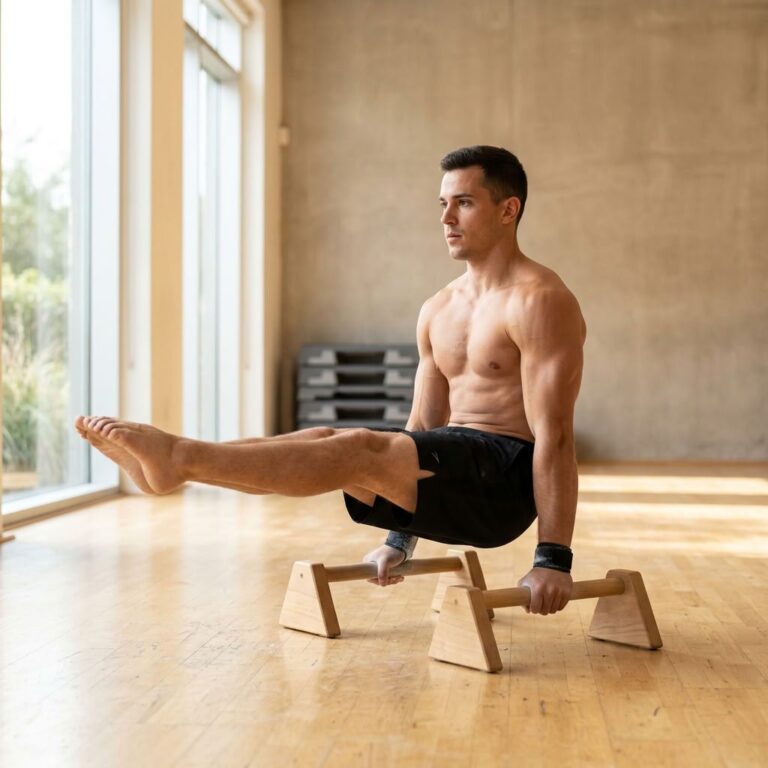
What is the difference in calisthenics vs weights?
Calisthenics uses your own bodyweight as resistance. Think push-ups, pull-ups, squats, dips and core work. You can do it almost anywhere.
Weight training uses external load, such as dumbbells, barbells, cables and machines. You add or remove plates to change the difficulty. It usually happens in a gym or a home setup with equipment.
Both methods follow the same principle. You challenge a muscle a little more over time, and your body adapts. The tools simply differ.
Strength and muscle: how they compare
Many people believe weights are the only way to build muscle. However, bodyweight training can build real strength and size, especially for beginners. The key is to make the exercise harder as you improve.
For example, you can move from a simple push-up to a slower tempo, then to feet-elevated or one-arm progressions. Each step adds challenge without a single plate.
On the other hand, weights make it easy to add small, exact increases. If you want to lift very heavy loads or train one muscle in isolation, weights have the edge.
Mobility, control and skills
Calisthenics tends to train the whole body together. Pull-ups, handstands and levers demand strong shoulders, a tight core and good body control. As a result, many people notice better coordination.
It also leads to fun skills, such as handstands and muscle-ups. These give you clear goals that feel rewarding. Our lead coach has spent 12 years teaching them.
Weights can also build control, but the focus is often on load. Machines, in particular, guide the movement for you. That is useful for safety, but it asks less of your balance.
Cost, space and convenience
On cost, calisthenics has a clear advantage. You need very little equipment, maybe a pull-up bar and a mat. You can train at home, in a park or on the beach.
Weights need dumbbells, a bench or a gym membership. That adds cost and takes space. Moreover, travel to the gym costs time, which matters in Dubai traffic.
If you want to compare the investment in more detail, see our guide to personal trainer cost. It explains what changes the price.
Injury risk and safety
In the calisthenics vs weights question, safety matters too. Both styles are safe when you use good technique and sensible progress. Problems usually come from doing too much too soon. That is true for weights and for bodyweight work.
With weights, a heavy load with poor form can strain the back or shoulders. With calisthenics, jumping into advanced moves can stress the wrists, elbows and shoulders. Therefore, start simple and build up.
If you have a health condition or injury, check with your doctor first. A coach can then adapt either method to suit you.
Calisthenics vs weights: which is better for your goal?
There is no single winner in calisthenics vs weights. Instead, match the method to what you want.
- General fitness and health: either works; calisthenics is easier to keep up at home.
- Weight loss: both help when you stay active and eat sensibly; pick the one you will repeat.
- Maximum muscle size: weights give easier control of heavy loads.
- Skills and body control: calisthenics is hard to beat.
- Busy schedule or travel: calisthenics needs almost nothing.
The World Health Organization recommends regular weekly activity and strength work for adults. You can read the World Health Organization physical activity guidelines for general targets. Either style can help you meet them.
Why not combine calisthenics and weights?
You do not have to choose one forever. Many people mix both. For instance, you might do pull-ups and push-ups, then add a few weighted squats or rows.
Choosing between calisthenics vs weights is not always necessary, because this approach keeps training varied and balanced. It also lets you use the strengths of each style, and it protects you from getting bored. Variety matters because the best programme is the one you keep following for months. A coach can design the mix so it suits your week.
At YourTurn DXB, we start with how you feel before we plan the session. If you want a place to begin, read calisthenics for beginners and our post on building strength at home. You can also meet our team on our coaches page.
Frequently asked questions
Can I build muscle with calisthenics alone?
Yes, especially in the first months and with good progressions. To keep growing, you must make exercises harder over time. Results vary from person to person.
Is calisthenics good for beginners?
Yes. You can start with easy versions, like wall or knee push-ups, and progress slowly. A coach can show you the right level.
Do I need a gym for weights?
Not always. Dumbbells and bands work at home. However, a gym offers more equipment and heavier options.
Which is better for women and moms?
Both are great. Calisthenics is convenient for home training, and light weights add variety. Choose what you will enjoy and repeat.
Not sure where to begin with calisthenics vs weights? Book a session on WhatsApp and we will help you pick a plan.
HIIT Training in Dubai: How to Do It Right
HIIT training in Dubai can be an efficient way to build fitness in a short time, but the heat and humidity make it important to do it right. HIIT means high intensity interval training, where short bursts of hard effort are followed by rest. This guide shows you how to plan it safely and enjoy it.
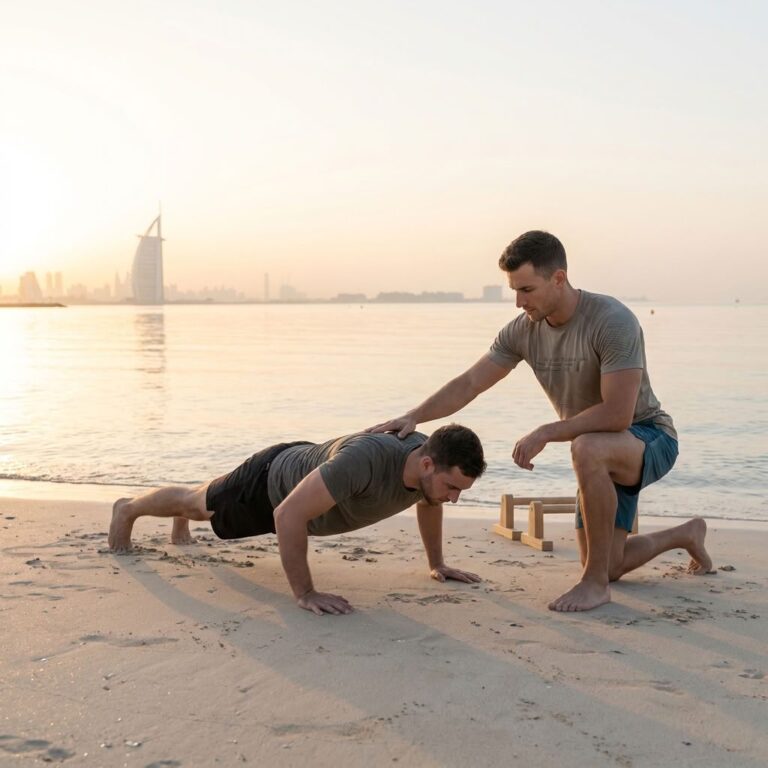
What is HIIT and why do people like it?
HIIT alternates hard work with recovery. For example, you might work for 30 seconds, then rest for 30 seconds, and repeat for several rounds. The effort feels tough, but the session is short.
People like it for a few reasons. It saves time, which suits busy schedules. It needs little equipment. It also keeps you engaged because the clock keeps changing.
However, HIIT is demanding. It is not the best choice for every day, and it is not right for everyone. Quality matters more than doing it often, and rest days are part of the plan.
Why HIIT training in Dubai needs a smart plan
Dubai heat changes the game. From roughly June to September, outdoor temperatures and humidity can be very high. Hard intervals outside during these months raise the risk of overheating.
Therefore, we usually move summer sessions indoors, with air conditioning on. In cooler months, a park or beach works well, especially early in the morning or in the evening.
Hydration matters all year. Drink water before, during and after training. If you feel dizzy, sick or very unwell, stop and rest in a cool place.
The basics of a safe HIIT session
A good session has clear parts. Each one has a job.
- Warm-up (5 to 10 minutes): raise your heart rate slowly and mobilise your joints.
- Intervals (10 to 20 minutes): work hard, then recover, for several rounds.
- Cool-down (5 minutes): walk, breathe and stretch gently.
Choose simple exercises that you can do with good form even when tired. Squats, mountain climbers, fast steps, skater jumps and push-ups work well. Avoid complex moves when you are exhausted, because form slips first.
Sample beginner HIIT workout
Here is a gentle example of HIIT training in Dubai that you can try at home, with no equipment. Always warm up first.
- 30 seconds of bodyweight squats, then 30 seconds of rest.
- 30 seconds of incline push-ups against a table, then 30 seconds of rest.
- 30 seconds of marching knees, then 30 seconds of rest.
- 30 seconds of mountain climbers at a steady pace, then 30 seconds of rest.
Repeat the circuit two or three times. As you get fitter, you can lengthen the work time or shorten the rest. However, make only one change at a time.
If this feels too hard, lower the pace or take longer breaks. Beginners often do best with a rest period longer than the work period at first.
How often should you do HIIT?
Most people doing HIIT training in Dubai do well with one to three sessions a week. Your body needs time to recover, because the effort is high. On other days, add strength work, walking or mobility.
In addition, balance matters. If you only do HIIT, you may miss out on slower strength building and joint care. A mix of calisthenics, mobility and easier cardio gives a more complete plan.
The World Health Organization suggests adults do regular weekly activity, including strength work. You can read the World Health Organization physical activity guidelines for general targets. HIIT can be one part of that picture.
HIIT training in Dubai during Ramadan
During Ramadan, energy and hydration change. Many people prefer to train lightly before iftar or, more often, a couple of hours after eating. High intensity work while fasting and dehydrated is not a good idea.
So we reduce the intensity, shorten the session and focus on movement quality. Listen to your body and adjust. If you are unsure, speak with your doctor.
Who should be careful with HIIT?
HIIT training in Dubai is not suitable for everyone. If you have a heart condition, high blood pressure, joint problems, are pregnant or recovering from an injury, check with your doctor first. A coach can then adapt the session.
Beginners should also build a base first. Start with walking, simple strength moves and light circuits for a few weeks. Next, add short intervals when you feel ready.
At YourTurn DXB, our coaches start with how you feel that day. If you are tired or stressed, we choose a gentler session. You can meet them on our coaches page, and learn about pricing in our guide to personal trainer cost.
For more ideas, read our posts on weight loss training at home and calisthenics for beginners.
Frequently asked questions
Is HIIT good for weight loss?
It can help as part of an active lifestyle with good food and sleep. However, no workout guarantees results. Choose a routine you can repeat.
Can I do HIIT outdoors in summer in Dubai?
We advise against hard intervals outside in the peak heat. Train indoors, or go very early or late, and keep the intensity lower.
How long should a HIIT session be?
Many sessions last 20 to 30 minutes in total, including warm-up and cool-down. Short and well done beats long and sloppy.
Do I need equipment?
No. Bodyweight exercises are enough. A mat and a timer help, and a coach can bring extra tools.
Want a plan that fits your level and the Dubai climate? Book a session on WhatsApp and we will build a safe HIIT routine with you.
Back to home